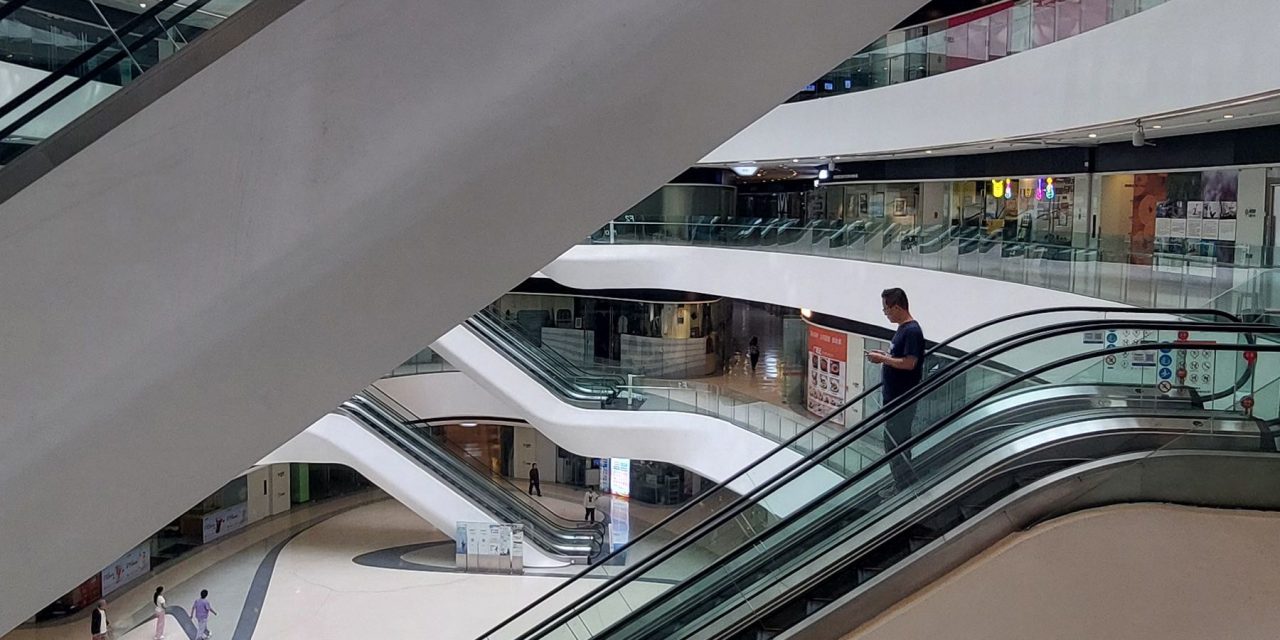
2050920 – Beijing – Galaxy-Soho Futuristic but empty shopping mall
Today, after breakfast, Gulden did the laundry in the hotel’s basement. When that finished, we wanted to visit Galaxy-Soho, which I had read about as a futuristic complex. We didn’t know what to expect, but its futuristic style was an attraction in the middle of the world’s high-tech leader.
We called a cab to the hotel using our new Didi app, and in 2 minutes, it arrived at the parking lot. He took us to the complex. I was expecting high-tech offices similar to those at Apple or Google campuses in the US. Instead, we found ourselves facing an ultra-futuristic shopping mall design.
We walked around and took photographs, thinking the young people around us were tech workers; however, they turned out to be simply mall shoppers. Many non-tech stores had fronts, as well as many shuttered, closed, dark stores. We went inside, walked past many dark windows with no open retail stores, checked out an eyeglass store, used the bathrooms, saw judo exercise halls, dance practice places, and children’s learning centers, and walked out. If this was designed to attract shoppers, I don’t think it was successful, since the very few shoppers brought their children and used the facilities as a plaza to keep them busy with outdoor activities.
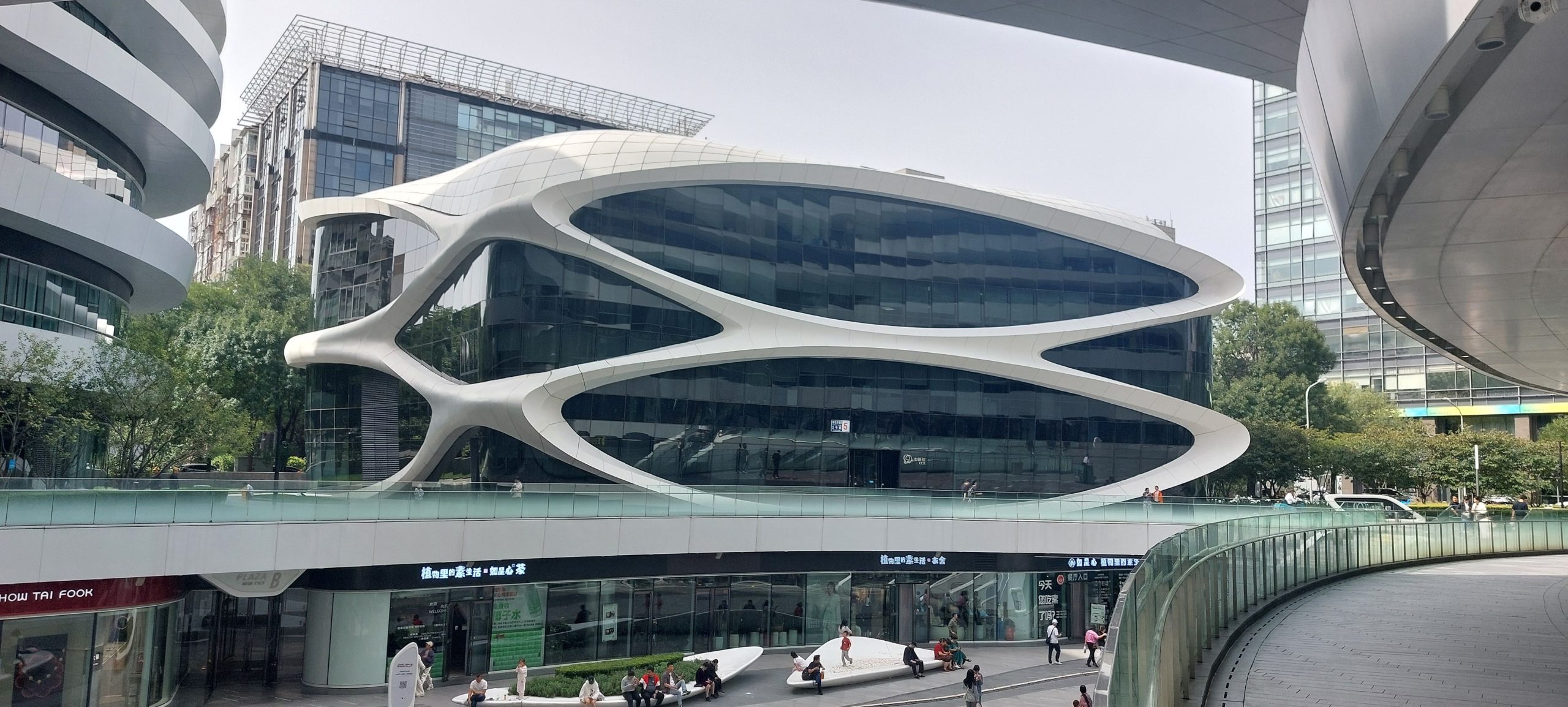
Beijing, Galaxy-Soho Shopping mall
Beautiful design, but is it successful?
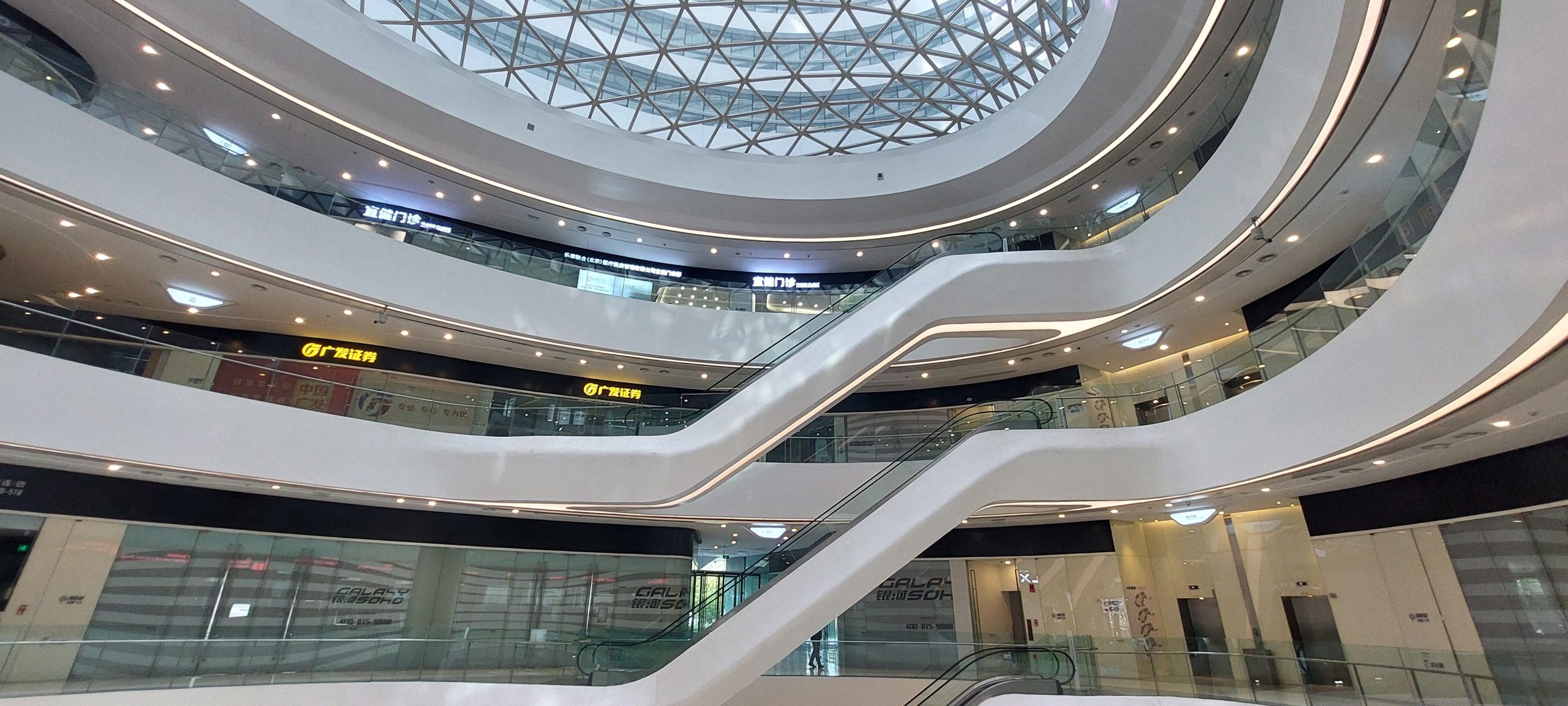
Beijing, Galaxy-Soho Shopping complex
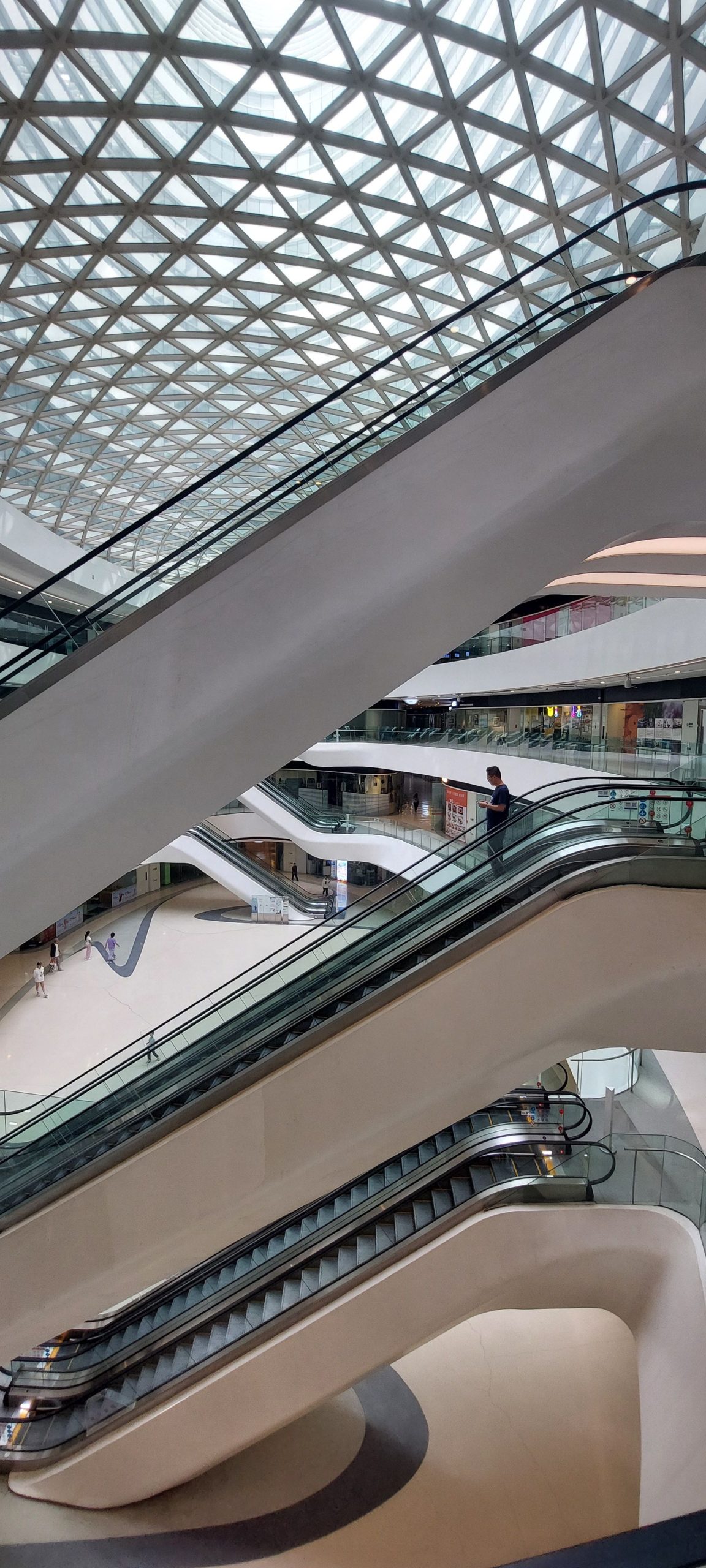
Beijing, galaxy-Soho shopping mall
Empty stores, closed stores, no business
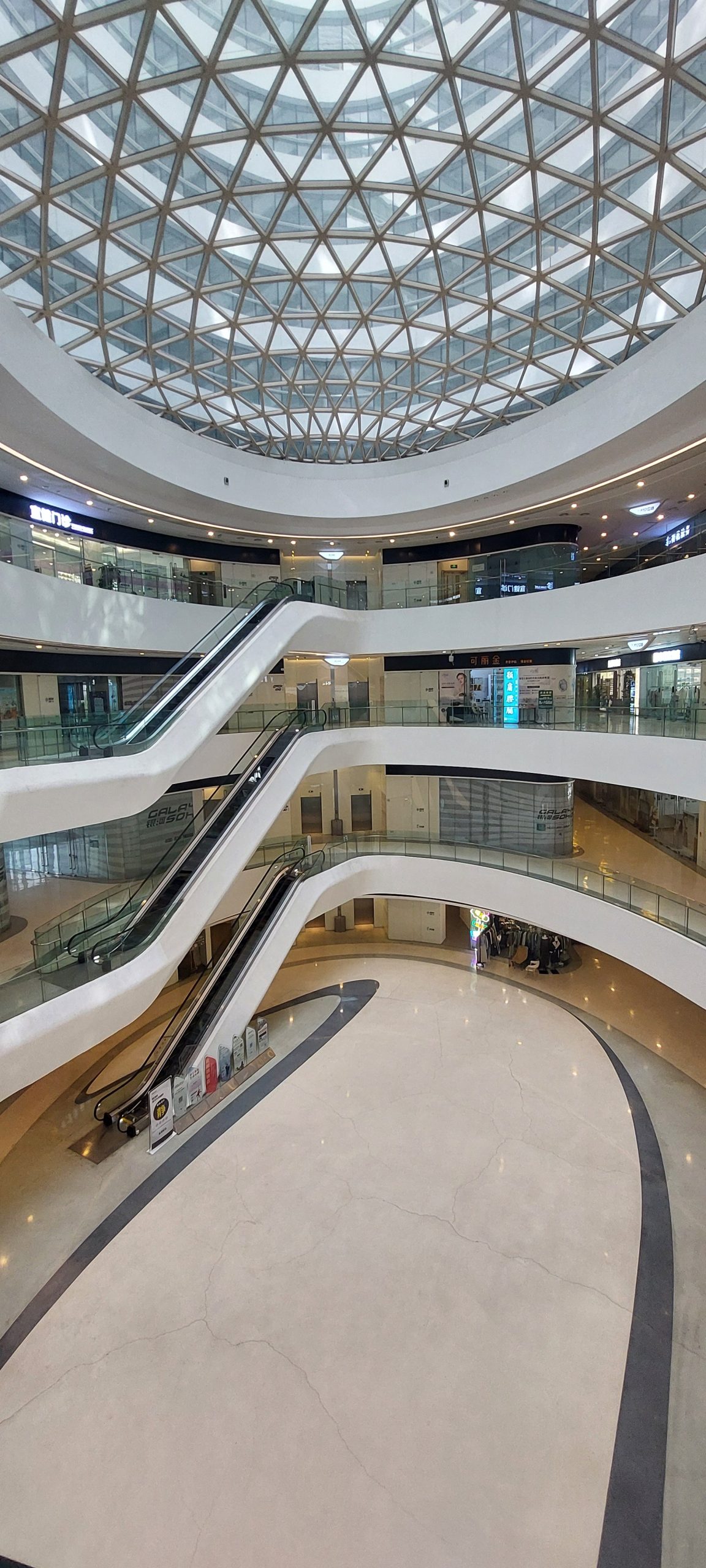
Beijing, Galaxy-Soho, empty shopping mall
More dark storefronts than open ones
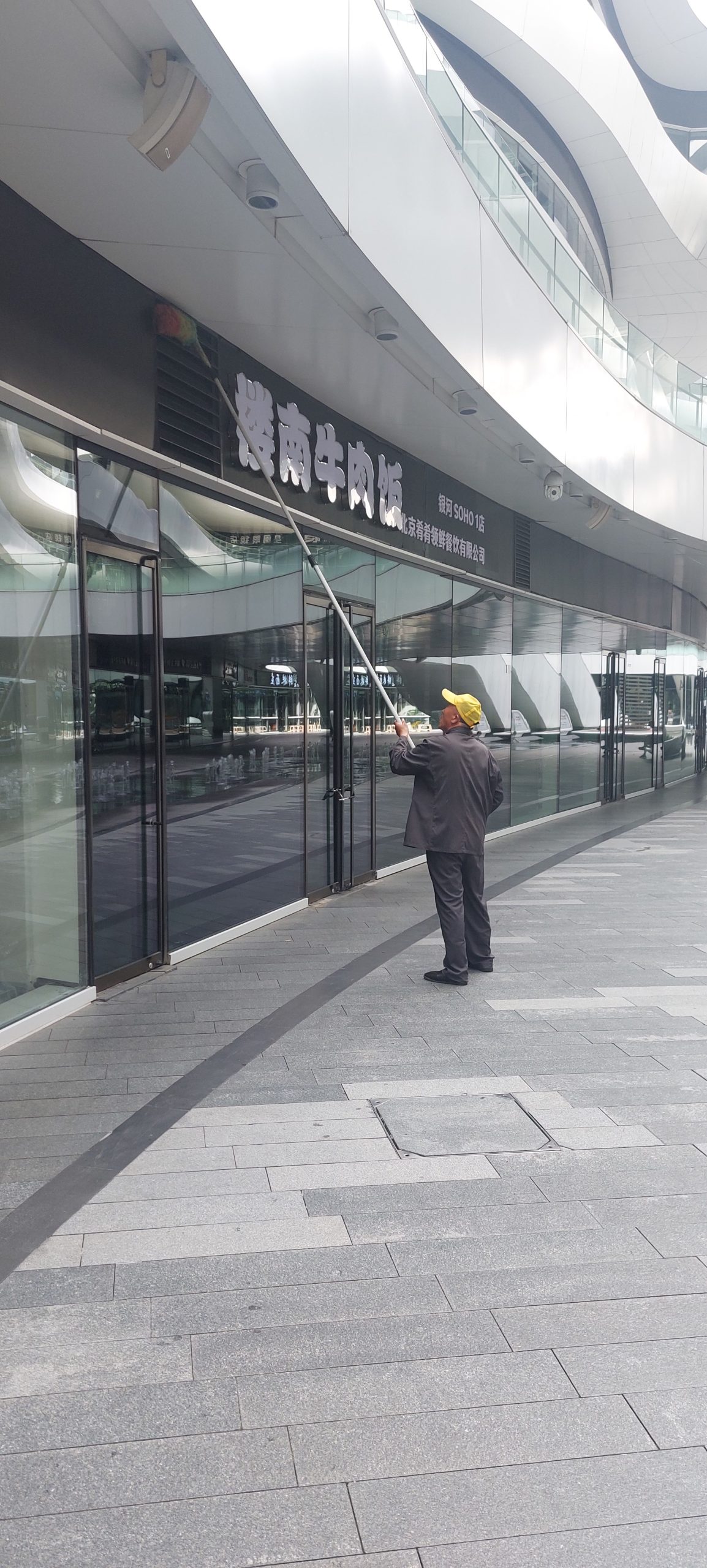
Beijing Soho-Galaxy, Cleaning even if the stores are empty
The overall well being of the complex is important. Cleaners wash and clean the store windows even if there is no open store there.
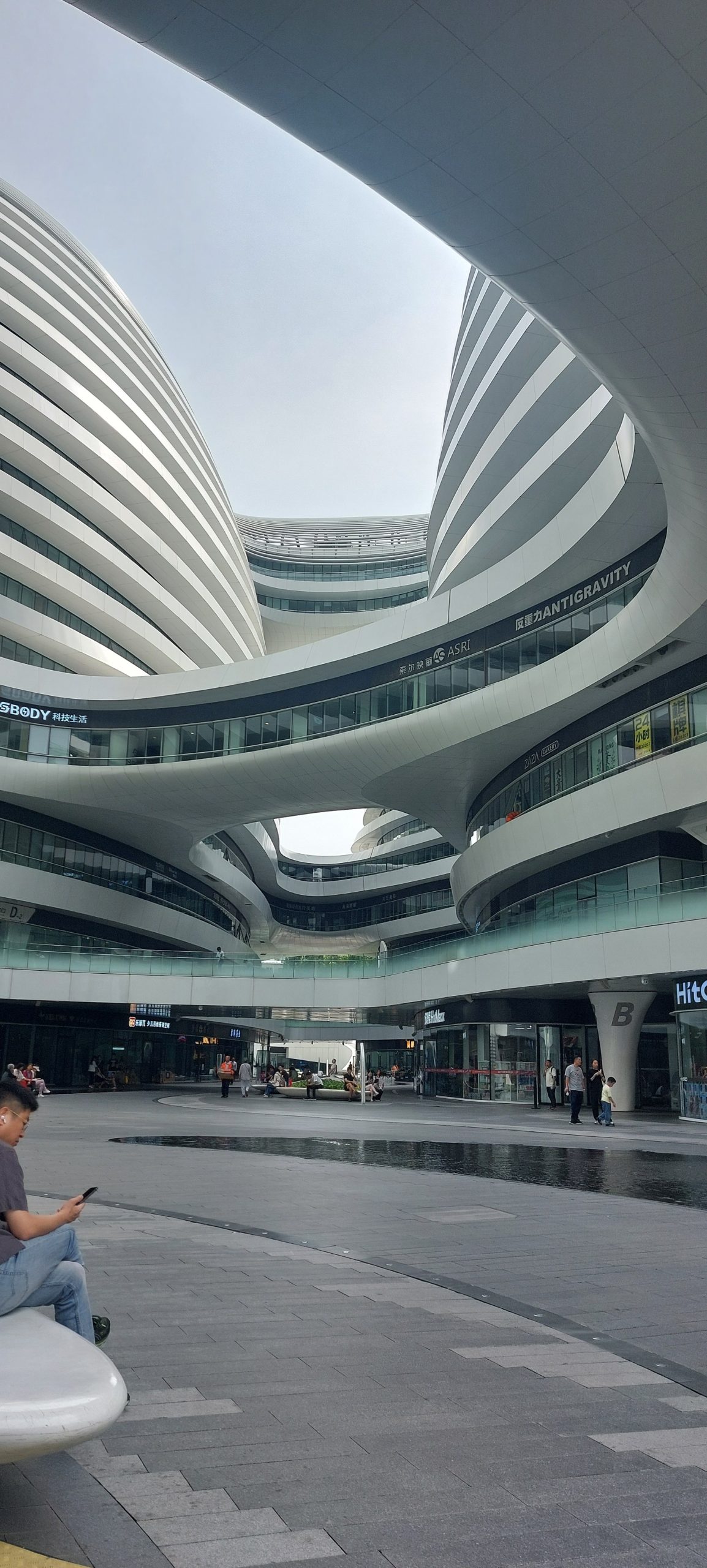
Beijing Galaxy-Soho
On the other hand, even though the center wasn’t busy or fully occupied, the complex was kept extremely clean. We saw a worker giving a thorough cleaning of all vents in an unoccupied store to maintain the overall appearance of the shopping mall.
The young, especially the high-tech workers are well-off. They can and do afford better apartments, high-tech gear, and food delivery from local restaurants. It is obvious that shopping complexes like these were developed to attract those workers. However, the emptiness surprised me. We heard from many that, after the COVID-19 pandemic, online shopping took off and shopping malls experienced a decline. We later saw the same decline in other shopping malls, like in Kunming and Chongqing. It is hard to say whether this decrease in sales is due to a habit change or unaffordability. We heard from others that capital is now moving to other South Asian countries where labor is much cheaper. The capitalist system forces capital to move to places where labor and conditions are more affordable and beneficial. Is China facing the same issue that other metropole countries experienced when capital moved to China? Is Africa the next step where capital will move to find workers willing to labor for almost nothing? Then, what will fuel the miracle growth we are experiencing in “Socialism with Chinese characteristics”?
We walked back to the hotel in 30 minutes. On the way back, we stopped to buy cherries, bananas, and red and yellow grapes. Since language is a significant barrier, we picked up the fruit ourselves and handed it to the clerk. However, after inspecting the bananas, he noticed a very slight brown line on one of them, and he immediately replaced it with the perfect ones. It was late afternoon, and we were hungry. Just as we arrived at the hotel, we decided to eat first. I remembered the best Chinese food we had the day before, and we found that another branch of Mei Zhou Po Restaurant, which we wanted to revisit when we returned to Beijing. It was only a few minutes away if we used the hotel’s back door, which led us through a restaurant. When we arrived at the building, it was just the back, delivery door of a larger building. When we asked the food delivery guys on their electric bikes, they told us to enter through a delivery door and proceed to the third floor. We entered and went up three floors by dark stairs, where an elderly worker woman was sleeping on the stairs, and restaurant uniforms and aprons were drying on the handrails. I entered a restaurant kitchen, surprising the cooks and workers. I showed the woman the restaurant’s name, and she walked us back down the stairs and showed us the door to the shopping mall on the other side. The Chinese are extremely friendly and go out of their way to help us. From there, we asked twice before taking the elevator to the third floor to the restaurant.
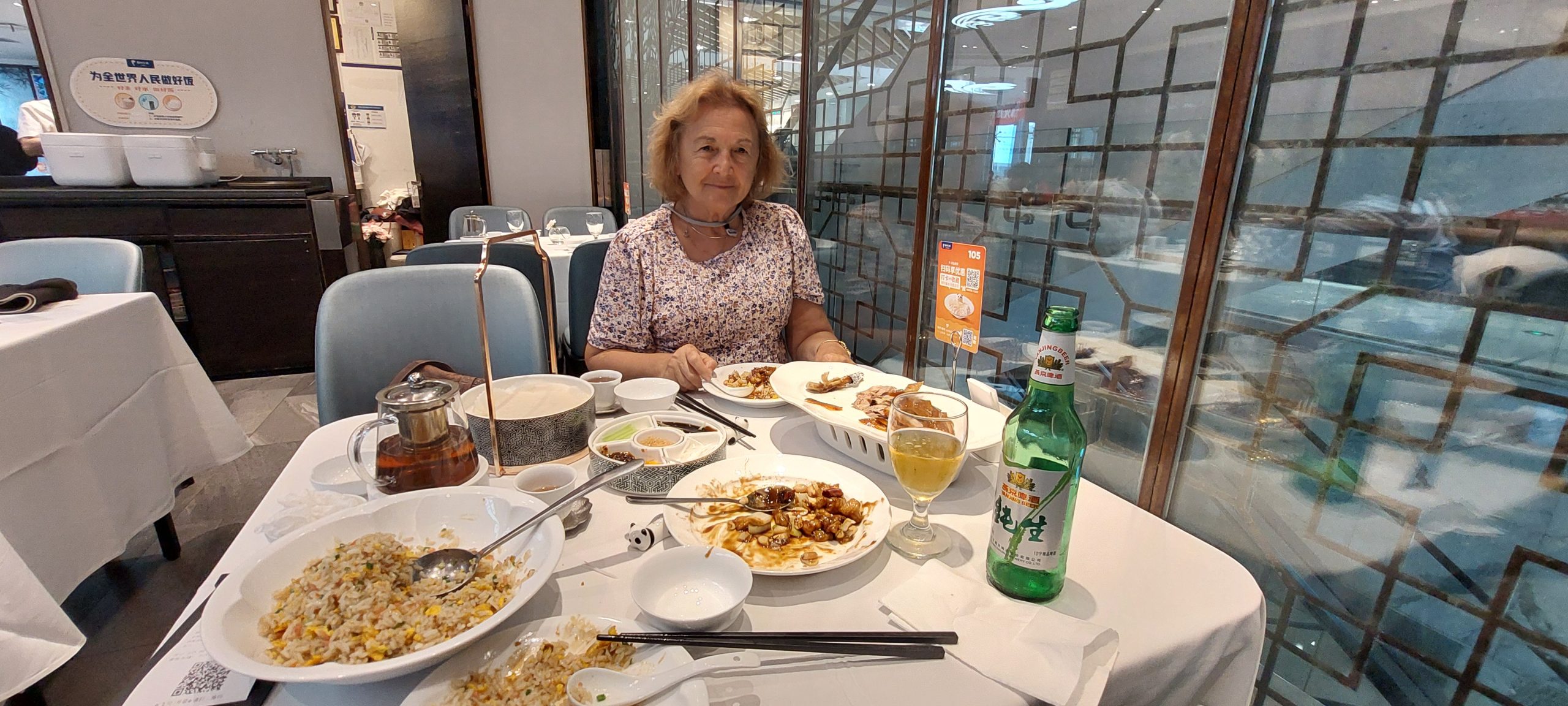
We had kung pao chicken, fried rice, and our second Peking roasted duck again. Everything was very delicious again, especially with the beer.
The mall was at the back of our hotel on the Wangfujing walking street. Walking back, we sat and watched people and tourists shopping, surrounded by buildings for Huawei, Apple, and Nike. We even saw a Turkish tour group happily waving their Turkish flag —a right they have here that they do not allow in Turkey —and wandering around.
Kung pao Chicken, Peking duck, fried rice,
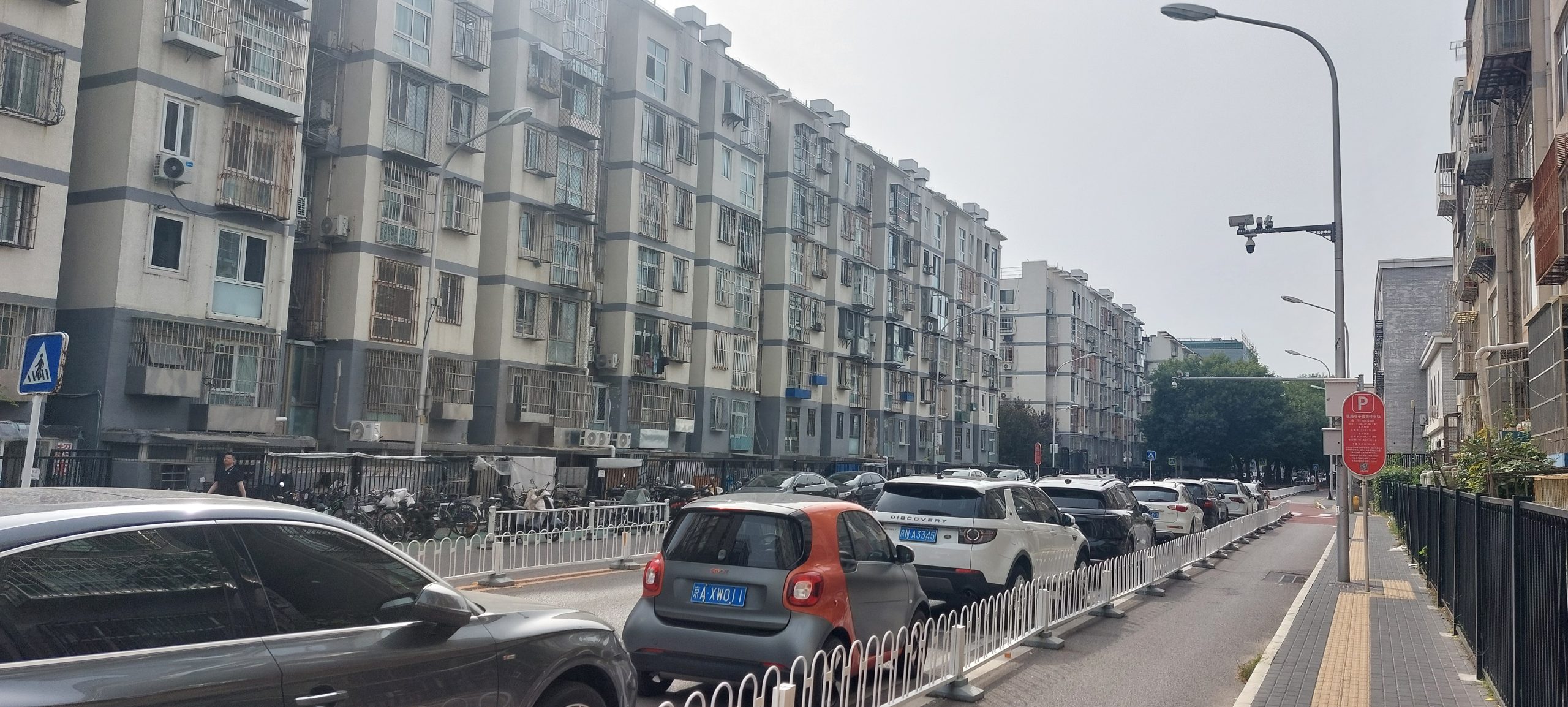
Beijing, older apartment blocks
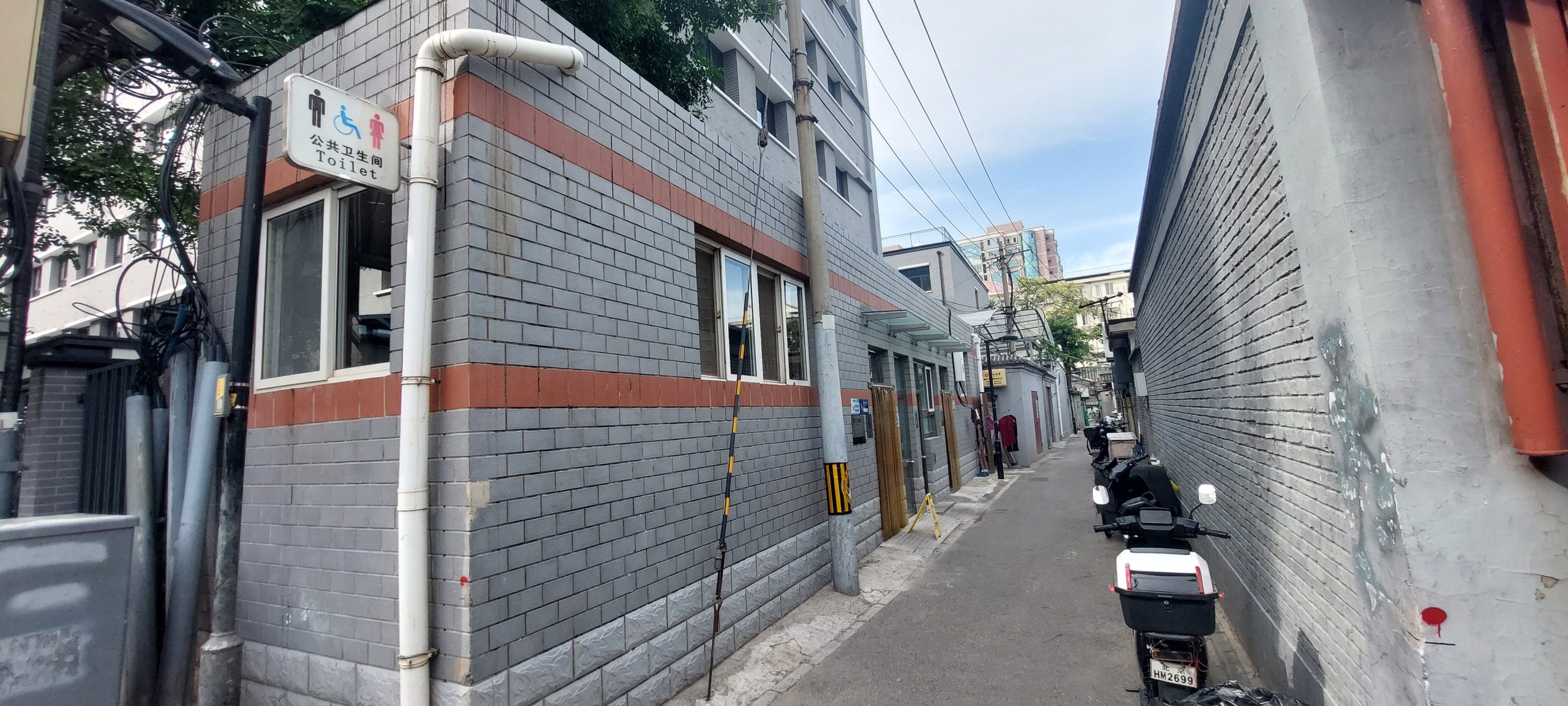
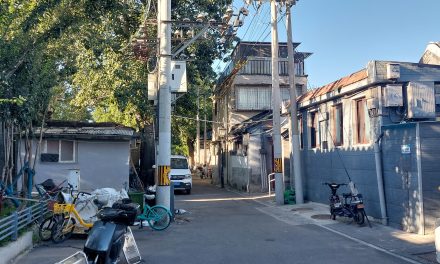
Beijing, Hutong and public toilets
Everywhere there are free public toilets to keep the city clean. Government workers keep the toilets clean
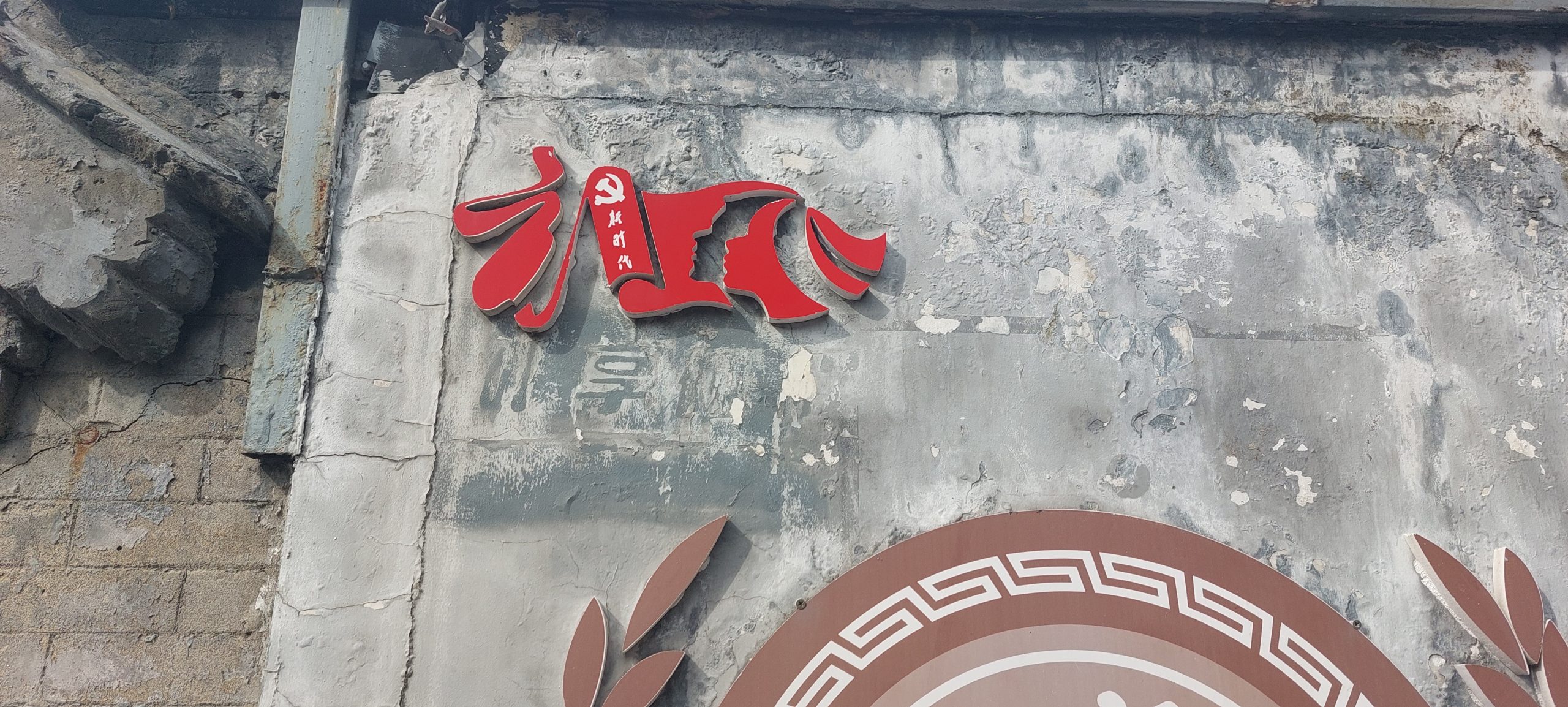
Beijing, an official government office hammer and sickle
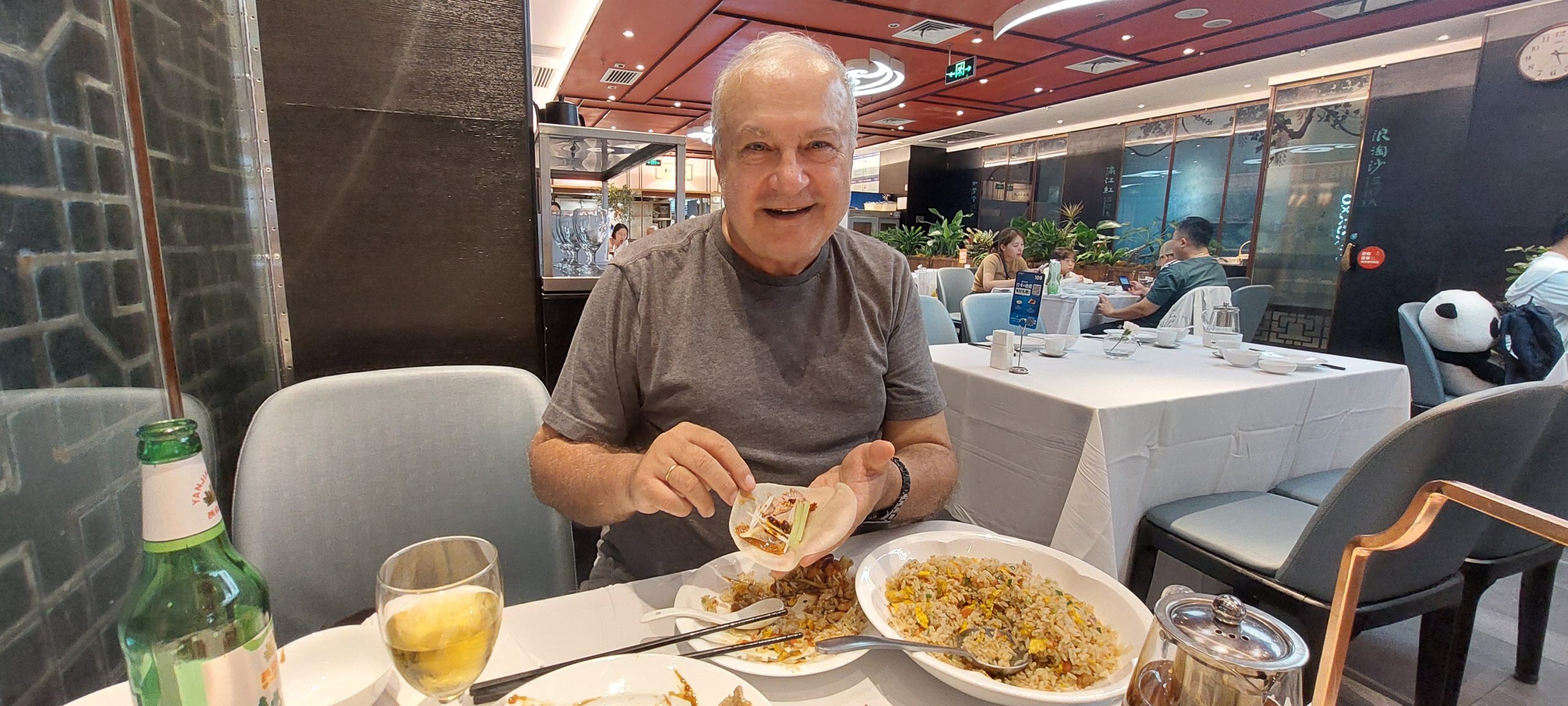
Beijing, Eating Peking duck the right way
The right way to eat the Peking duck is to eat the crispy skins by dipping them to sugar. Then sandwiching the other meat – Very oily duck meat – in small and paper thin bread slices.
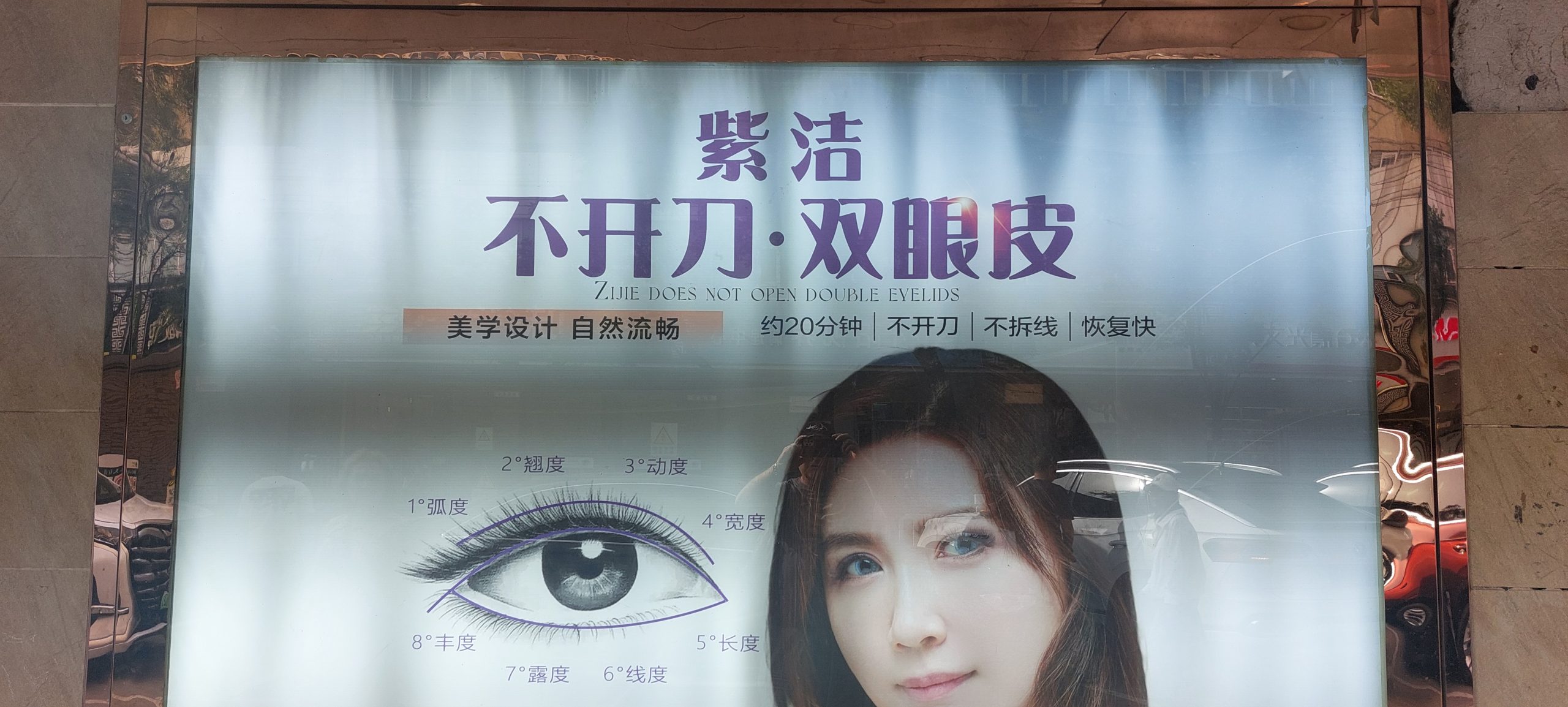
Advertising for plastic surgery to Asian women to look like whites. They remove the eyelids and give Asian eyes a double crease like white people’s eyes. WHY they do this is beyond me. Imperialist culture demonstrates itself in weird ways.
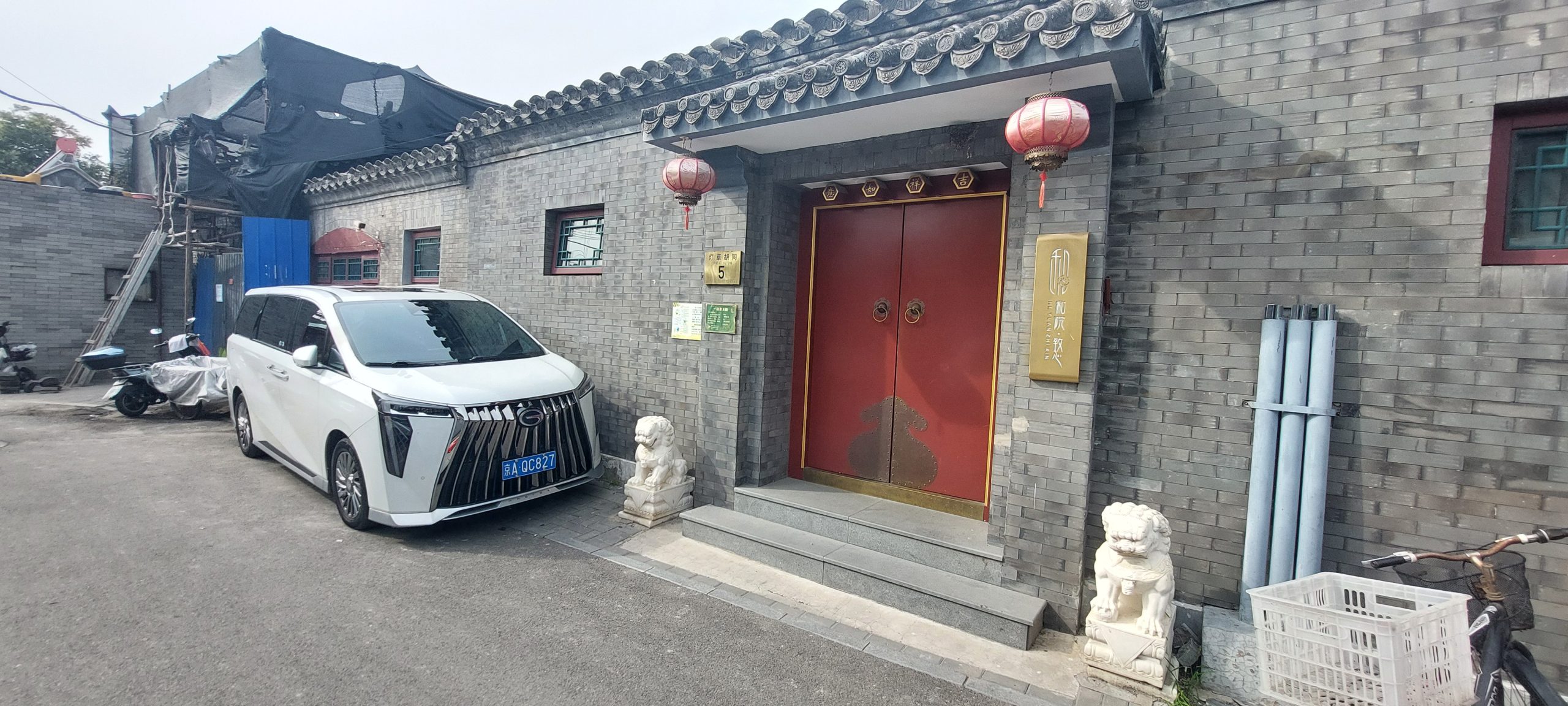
A luxury car is parked in front of a Hutong. The door has double mythical lion statues for protection. The door has four “hairpins” assigned only to a very high-ranking government official or the rich people.