2050919 – Beijing – 798 Art Compound
After taking it easy in the hotel for several hours, we decided to visit the 798 Arts Pavilion. The place was transformed from a weapons factory to an arts village. However, we wanted to have some cash on hand, just in case. We knew the “Construction Bank of China” handled foreign transactions better, so we decided to find the nearest branch and exchange some dollars for RMB by transferring funds from our US bank.
The bank branch was just 10 minutes ahead. We walked there, but we couldn’t find the branch. The other branch was about 30 minutes away. Since the weather was good, we decided to walk. We noticed another bank and walked to its lobby, but a smiling security guard told us something and, using sign language, said it was closed. We thought it was because of the lunch break, so we continued walking. We found the bank, and the reception guy, with his broken English, was very helpful. He showed Gulden how to use the special ATM to withdraw funds from her US bank and convert them to Yuans. She withdrew 2000 Yuan (about 300 dollars), and we thanked them profusely for their help and went out to grab a cab to the Artists’ Pavilion at 798.
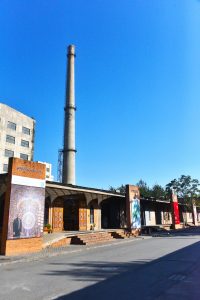
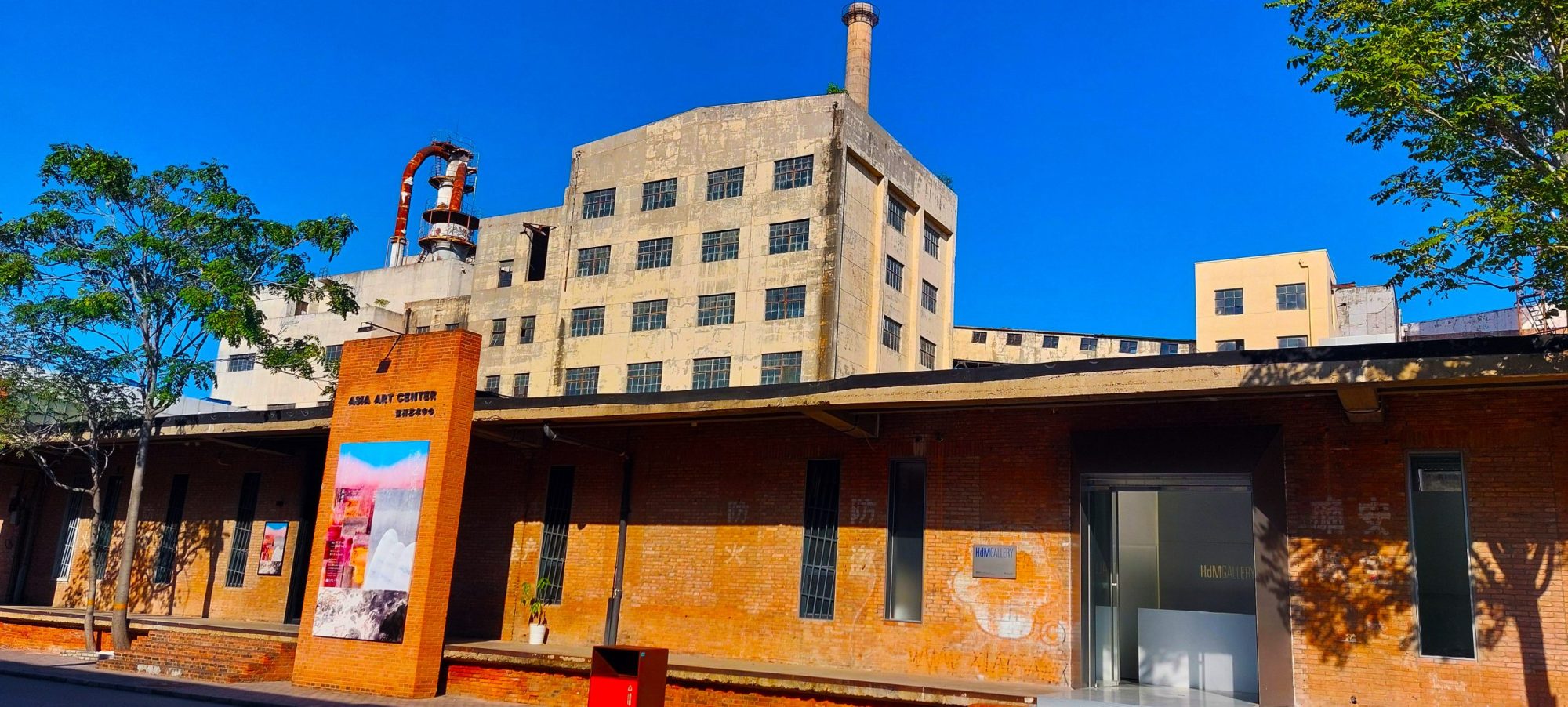
Art pavilions under the shadow of the weapons factory smokestacks
Hailing a cab on the street in Beijing
This became one of the hardest things we faced in Beijing. We are accustomed to simply signaling a passing taxi, and the driver often disregards all laws, rules, regulations, safety, and courtesy to stop and pick up the passengers. Not so in Beijing. We spent about an hour trying to get a cab. Our first mistake was going to a busy intersection and trying to get a cab there. After noticing that no taxi was stopping, we decided to walk down the boulevard to see if we could stop one away from the intersection. No matter which side of the street we tried, the cabs were determined to go from the farthest lane from us, close to the boulevard’s green divider. Nearly all drivers ignored my theatrical gestures and didn’t even respond. Very few raised their hands in a negative gesture, indicating not even to approach. We sat by the road. Gulden tried downloading a taxi-hailing app, but that too did not work, as it required registering a phone number. We walked back to the intersection, where there were more cabs, to no avail. We noticed a large hospital near us and thought we could catch one at the entrance if we ever got the chance. While walking there, I saw a taxi illegally parked in a driveway. However, as I was running towards it, the driver, having just picked up his lunch from the restaurant, sped away to avoid being ticketed. We saw a group of people standing by the side of the road with their faces in their phones, also trying to read the license plates. The cabs were coming to pick them up after being summoned from an app like Uber. After waiting a while, and everybody who was waiting got into their taxis, I saw a hesitating cab and grabbed it. Exhausted, we showed the driver the address of the 798 Art Pavilion. He recognized it and turned on the meter.
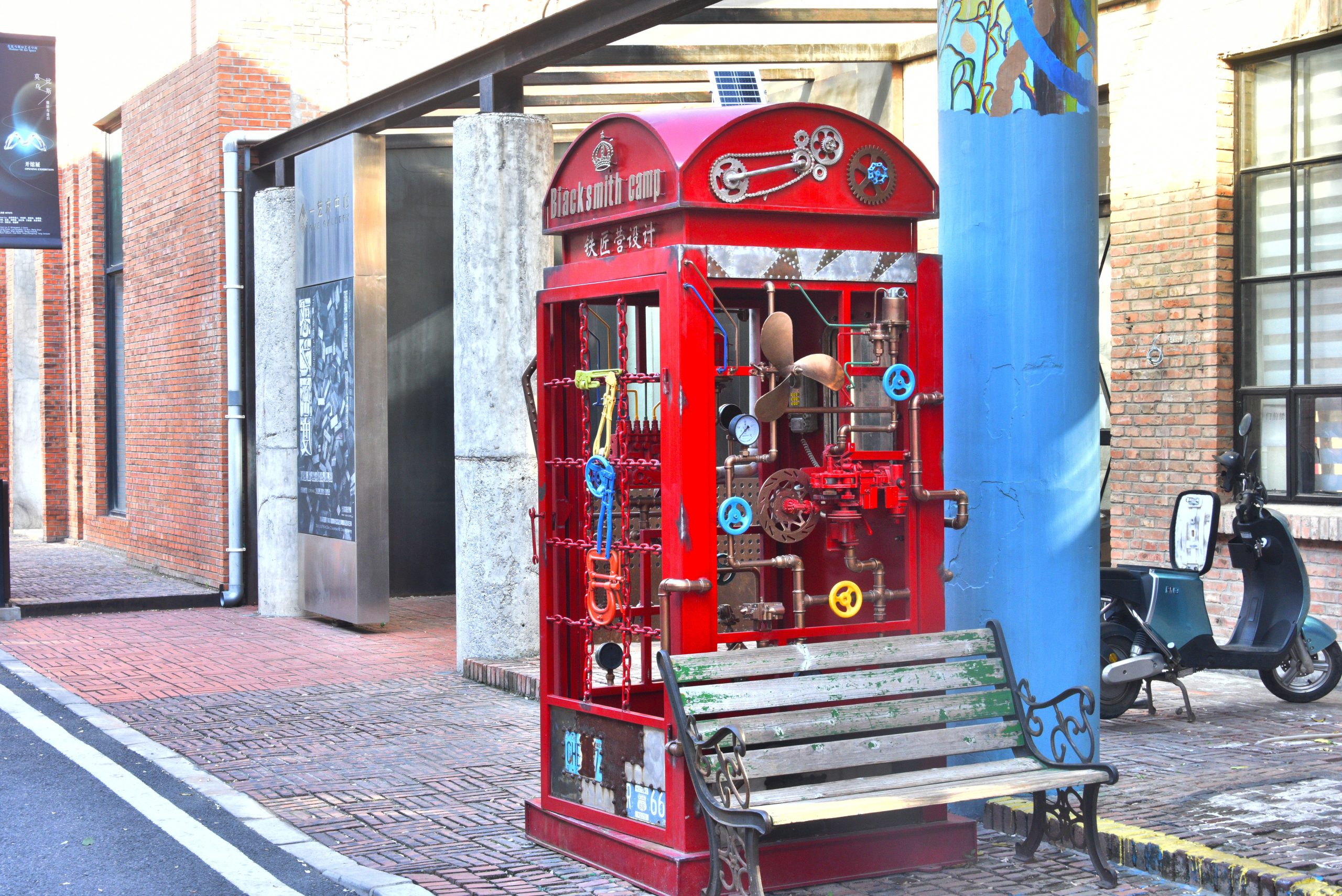
Beijing, 798 Arts Compound, telephone booth
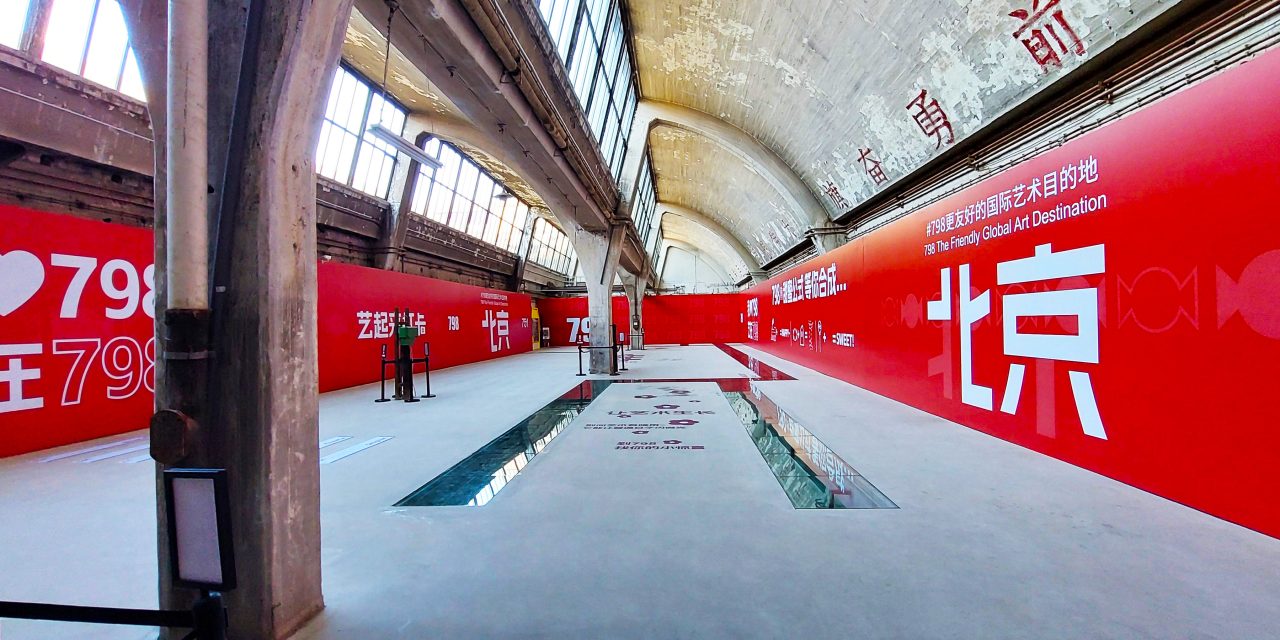
Art is everywhere in this huge space
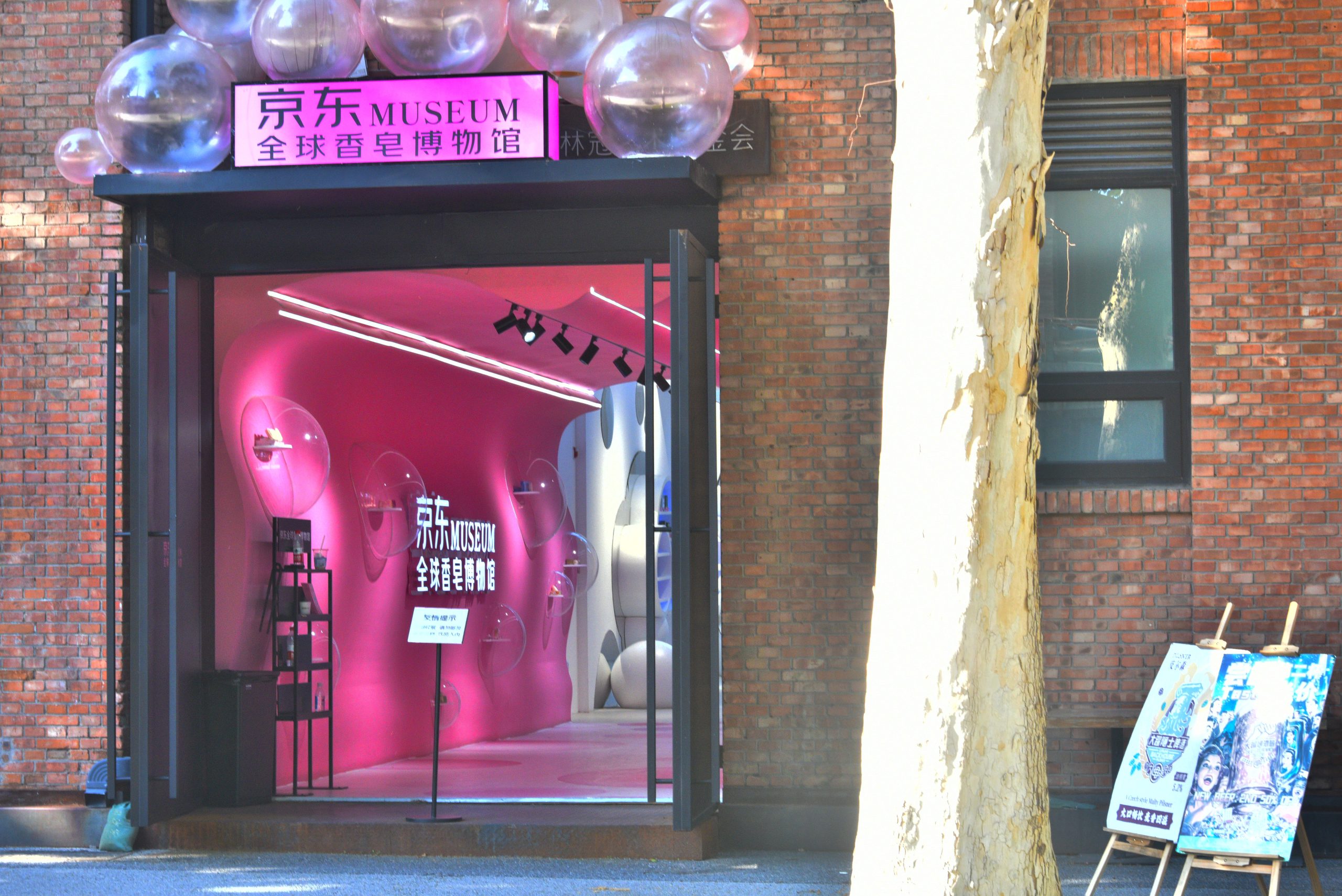
Beijing, 798 Arts Compound, Art Museum
Every other door is a museum here
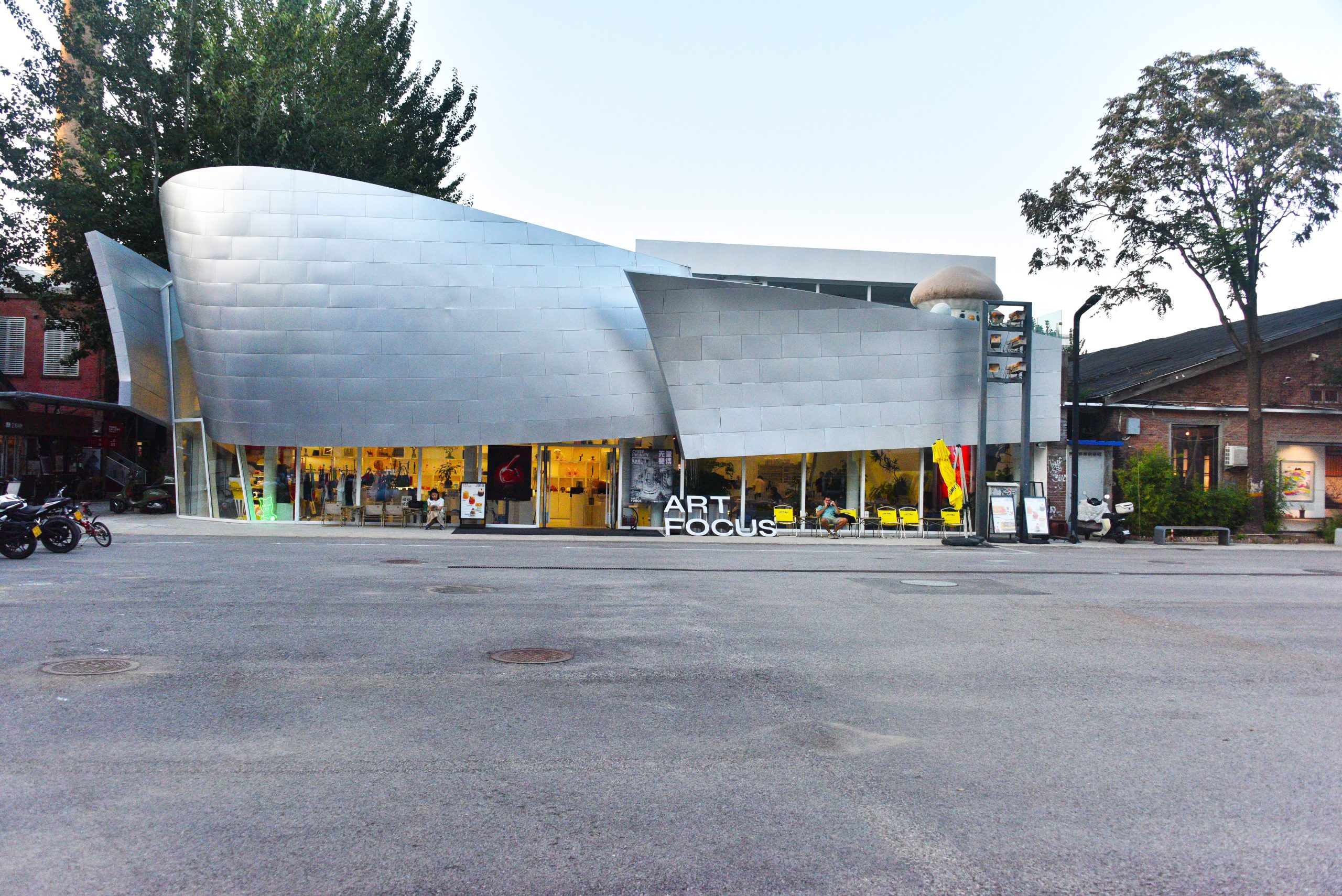
Beijing, 798 Arts Compound
Does this remind you of Los Angeles?
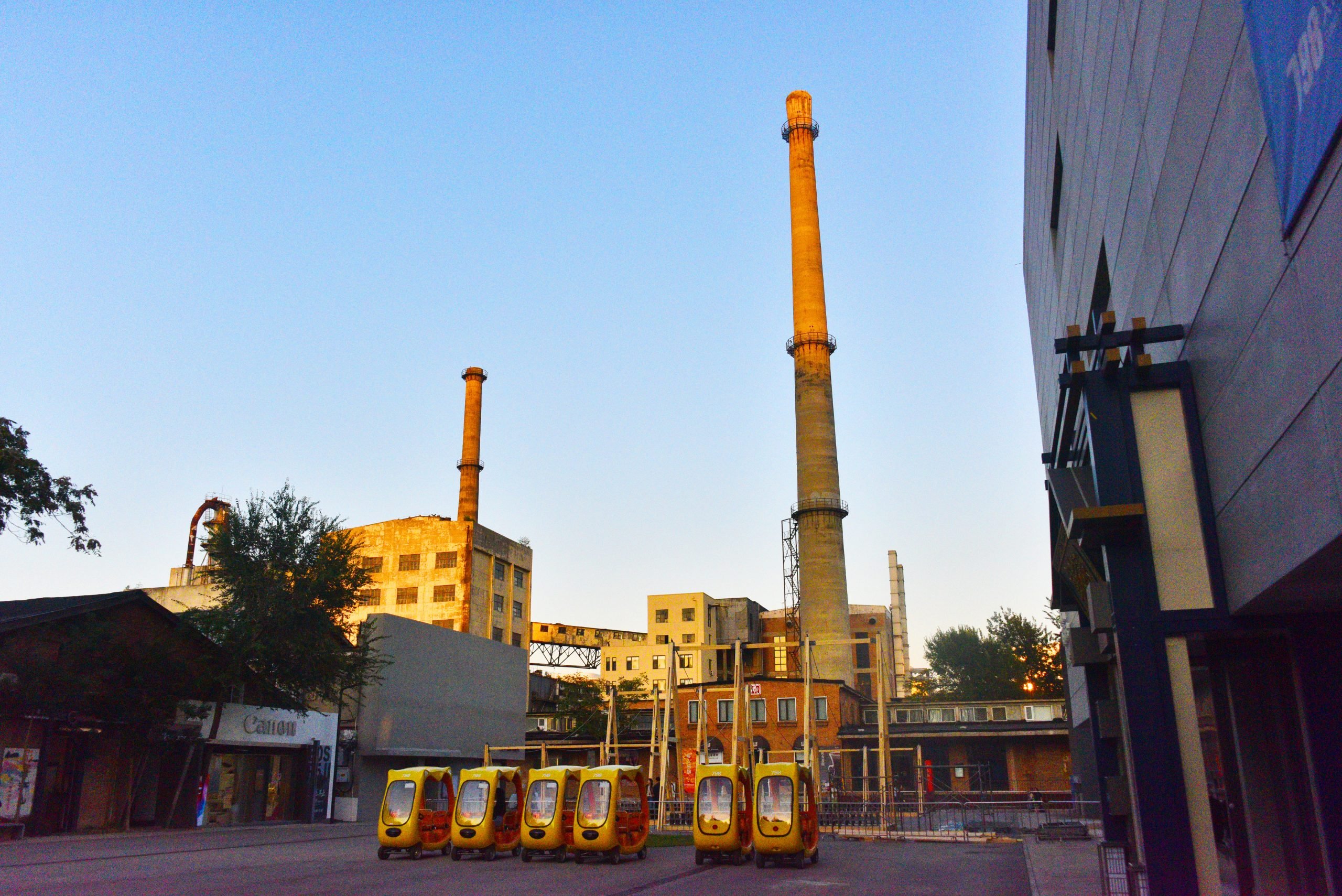
Beijing, 798 Arts Compound, Old smokestacks
Old weapons factory still stands tall in the background
798 Art Pavilion
An old weapons factory had been turned into, seemingly, starting artists to open their art galleries, storefronts, and small coffee shops.
The old factory and its smokestacks, decrepit buildings towered in the background, but one after another, small art galleries had been opened in small rooms facing narrow streets. The place obviously was either starting or not in good shape. Mostly tourists were walking around taking photographs. Many small shops selling crafts and small jewelry, as well as small cafes, lined both sides of the street. Not many customers attended the stores. Beautifully painted, clean, and well-organized galleries showcased a variety of works. Big halls were equipped for visual art experiences. Gulden went to a leather store and bought two bags. One was a beige backpack, the other a darker colored handbag. The total came to around a hundred dollars. My WeChat payment immediately refused when the Citibank card tried to call or text my US telephone number, which was in the hotel. Then I tried AliPay, which did the same. Gulden’s WeChat also did not work. Finally, she pulled out her credit card. I was told the US credit cards did not work in China; however, this time, it worked.
When the Olympics happened in Beijing in 2008, the government decided to clean up the air, and to improve the air quality, they seriously implemented strict measures. They planted trees in the whole city and the whole country. Heating was replaced with natural gas, motor vehicles were converted to electric, cars were allowed to traffic depending on their plate numbers, and polluting factories were updated to modern methods and were moved outside the cities. As a part of this plan, this weapons factory was shut down and artists moved in.
Payment Systems in China
China has revolutionized payment systems. Although stores and businesses are officially obliged to accept cash, this method of payment is rarely used. The problem gets worse as the store scrambles to find some change to give back. Usually, it becomes a big problem.
It was funny when I tried to have the hotel clerk break a hundred Yuan to pay a taxi driver who didn’t have any change. She struggled for about 10 minutes, trying to count how much she would give me. She stacked several 20s, then 10s, then she got confused, looked at each bill, then tried stacking and counting again, and again. Not feeling she had the right amount, she put all the 20s, 10s, and fives back into separate stacks and started counting one by one. I forgot my frustration and the waiting taxi driver outside as I watched in fascination.
Two online payment methods are used. WeChat and AliPay. One needs to download these apps to their phones. Foreigners should tie their foreign credit cards to these apps so that when a payment is made in China through these apps, the app will charge their foreign card in the background. However, even after one goes through the process of tying credit cards to the app, the first time the system is used, it will still go through a second level of user verification. And this involves sending a copy of your passport and taking several photos of your face, including turning, right and left, opening your mouth, etc.
There is still no guarantee that either one will work for the foreigners. It looks like the credit card banks that work with these two payment systems may pick and choose whoever they want to make a payment to. They don’t like to pay individuals, yes, individuals have accounts you can pay. Or they get picky about the businesses, and they don’t like small merchants. If the amount seems too much (too much for whom?), they can get suspicious and reject payment.
When they start rejecting payments, the card bank in the US sends a message that they are evaluating the security of the environment, and sends a message to your registered phone. I keep my US phone handy and ready (yes, roaming charges apply for the day, to get these security messages), and even if I verify that it was me and the transaction is safe, they still reject it.
On the Chinese side, all businesses keep two QR codes ready on their counter. You select the one you want to use, either AliPay or WeChat, and scan the code. So, the issue is not on the Chinese side, but rather on the US side, where the banks make it harder to use the payment systems in China.
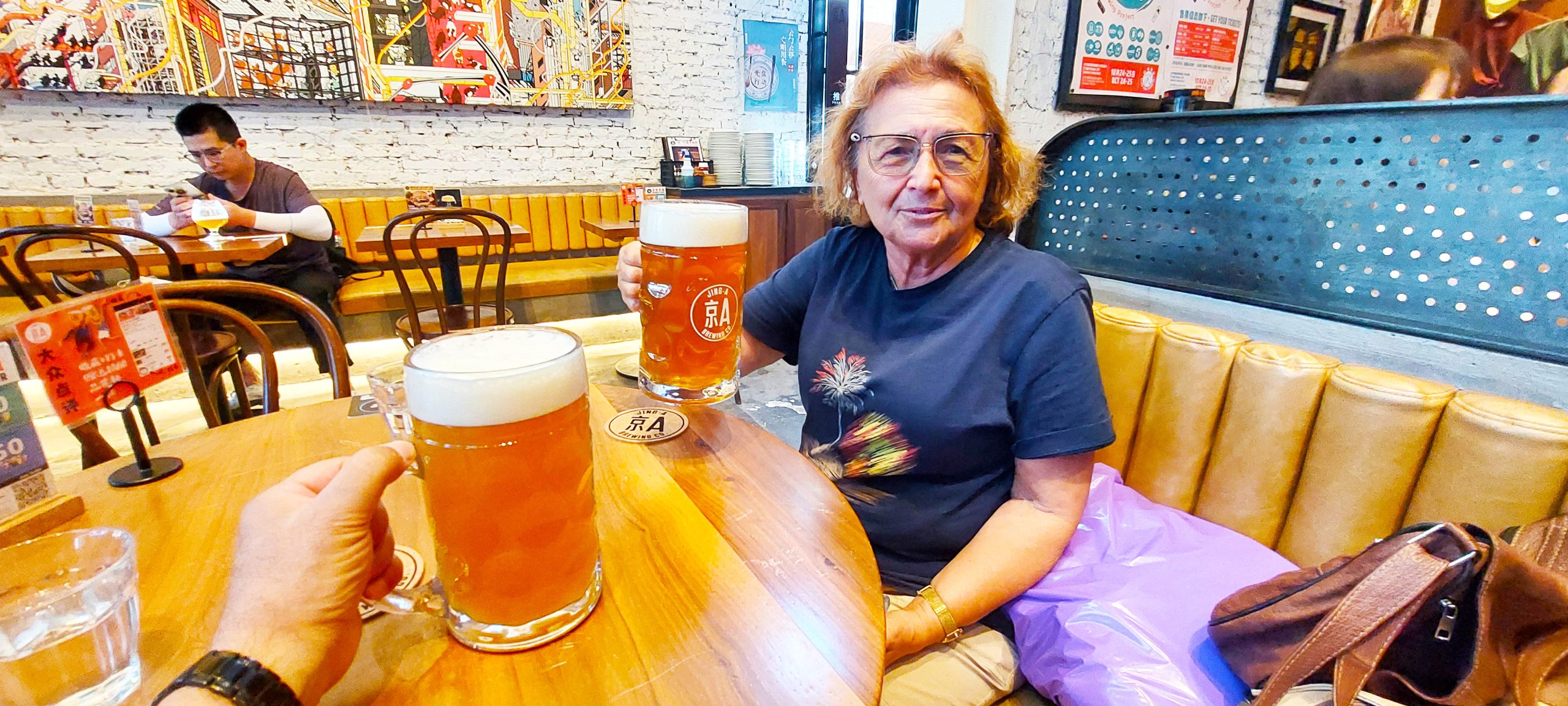
After walking around for an hour or so, we felt hungry and decided to get some Western food at the Jing-A Brewing Company, where many Western foreign tourists were eating and drinking.
We missed our Western foods, so we decided to try the pizza and hamburgers we saw in large pictures in front of the restaurant.
First, we ordered the beer using translation apps and the waiter’s help. We did not like the amount (350cc) and asked for a larger glass, and he casually said a liter, which we agreed. When the beer came, it was in a huge liter glass. By the time we stopped laughing about the beer, my burger, which had a “sweet and sour soup taste,” came. It was delicious and large. Gulden’s pizza came too, and we finished it all by washing it down with the beer. We couldn’t finish the beer.
We walked to the point where the taxi had left us to catch another cab. However, there were none. So, using a translator app, I asked the traffic police where we could get a cab. He replied that we could not. We were left trying to figure out what to do when a young man who had heard our conversation with the cop came and showed us that there was an application, Didi, built inside my AliPay application to call a cab. After playing with it for a while, I figured it out since it was very similar to Uber in the US. However, my Alipay was not working, as the leather bag store had tried it unsuccessfully a couple of hours earlier. The app had a solution: If you promise to show the last four digits of your phone to the taxi driver, you are allowed to pay by cash. The taxi arrived after 2-3 minutes. We got in, but the driver didn’t move and kept asking for something. We kept showing him the address, in English and in Chinese, even on the map. No, he kept asking something else. After a while, the guy pulled up his translator and told me to show the last four digits of my phone. I had forgotten to do that! I apologized and showed him my entire phone number. Because it was rush hour, the cab would cost us 60 Yuan (about $8.50). We had paid 41 Yuan coming to 798.
When we reached the hotel, I gave the driver a 100 Yuan, but he kept protesting because he had no change. China does not use much cash, and few people carry cash with them. So, I went inside to change the hundred Yuan, which the young woman behind the register took too long to count, count, and then count again, making a mistake every time because it was undeniable that she didn’t handle money frequently.
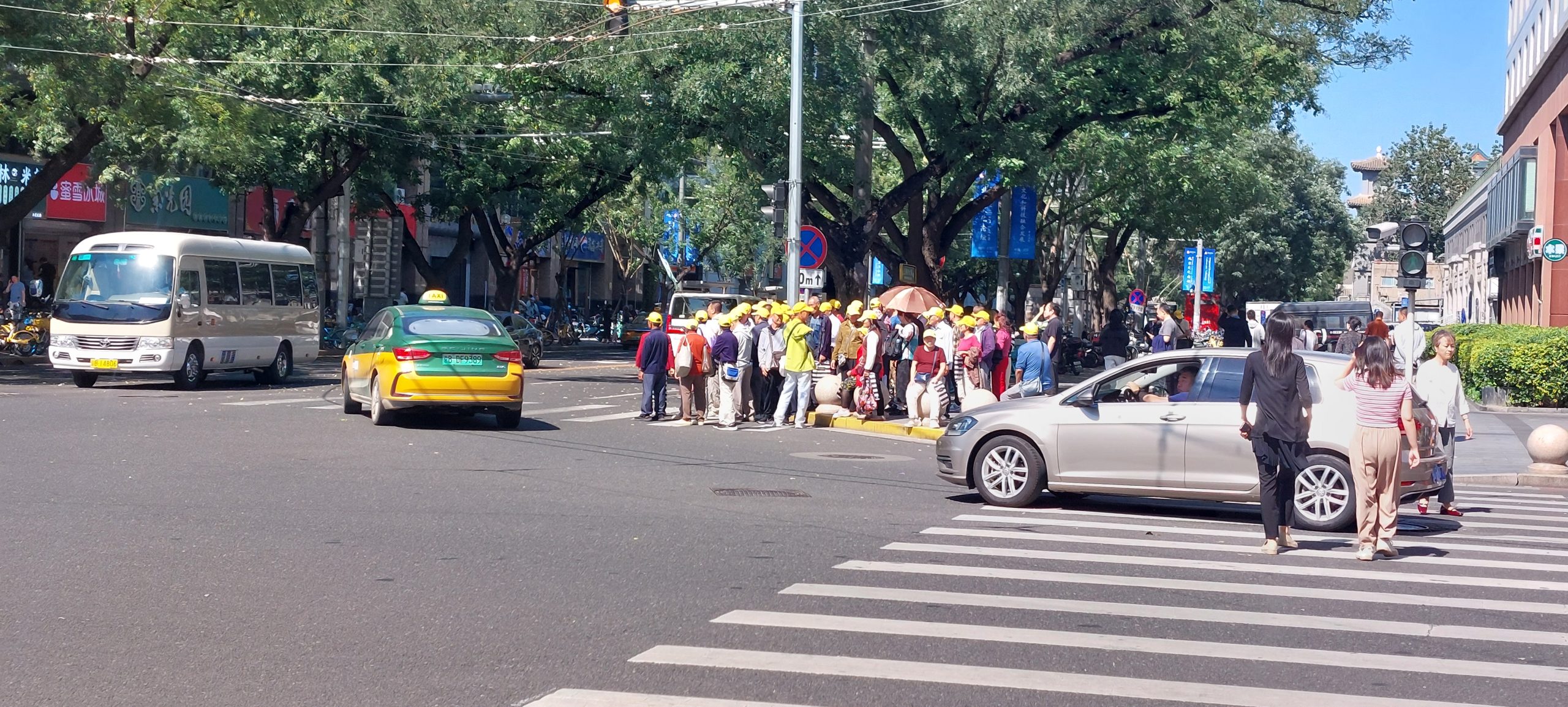
Beijing, Trying to catch a cab
We tried for an hour to catch a taxi, but the drivers would not stop, scared of being fined.
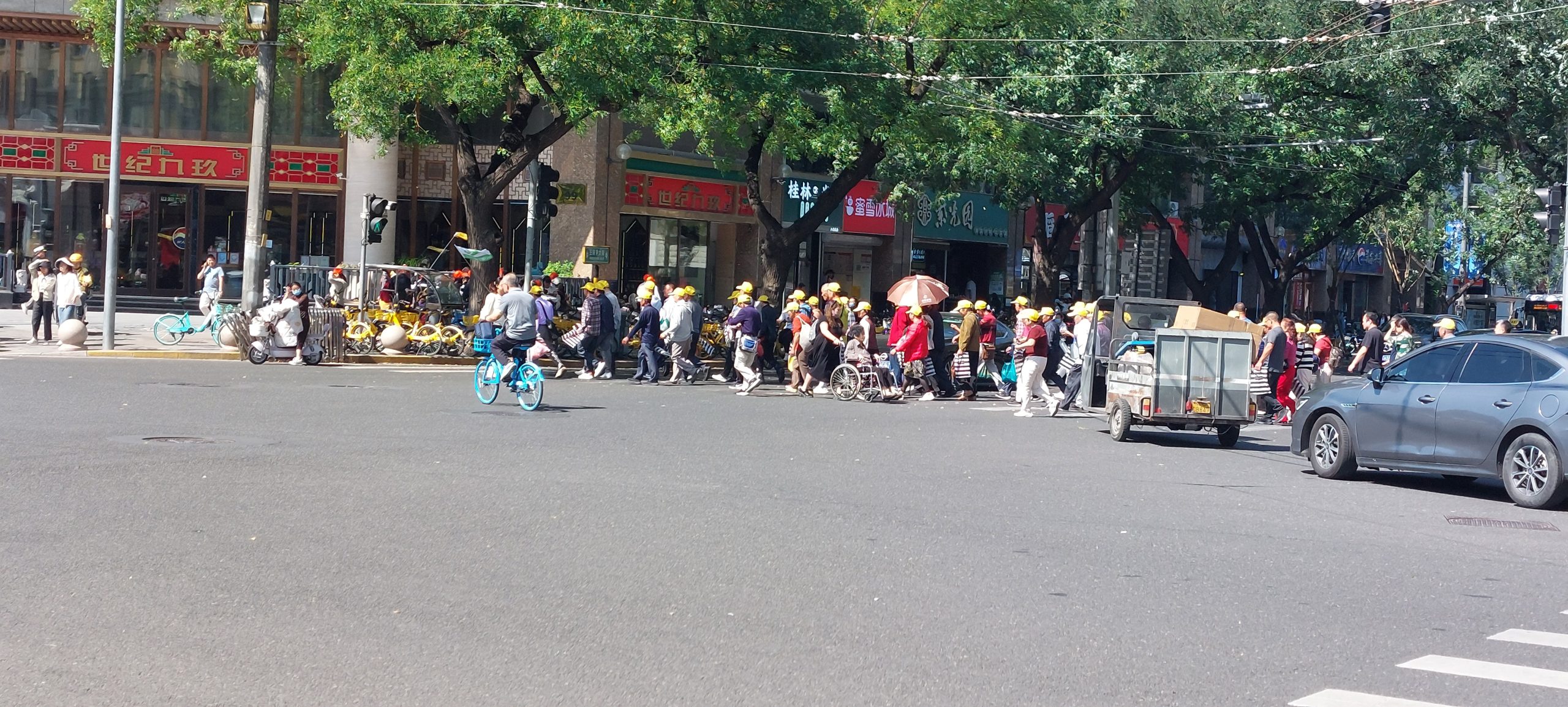
Beijing, A group of internal tourists
Everywhere internal tourist groups by tens of thousands flock the streets with their guides, flags, identifiable hats or clothes
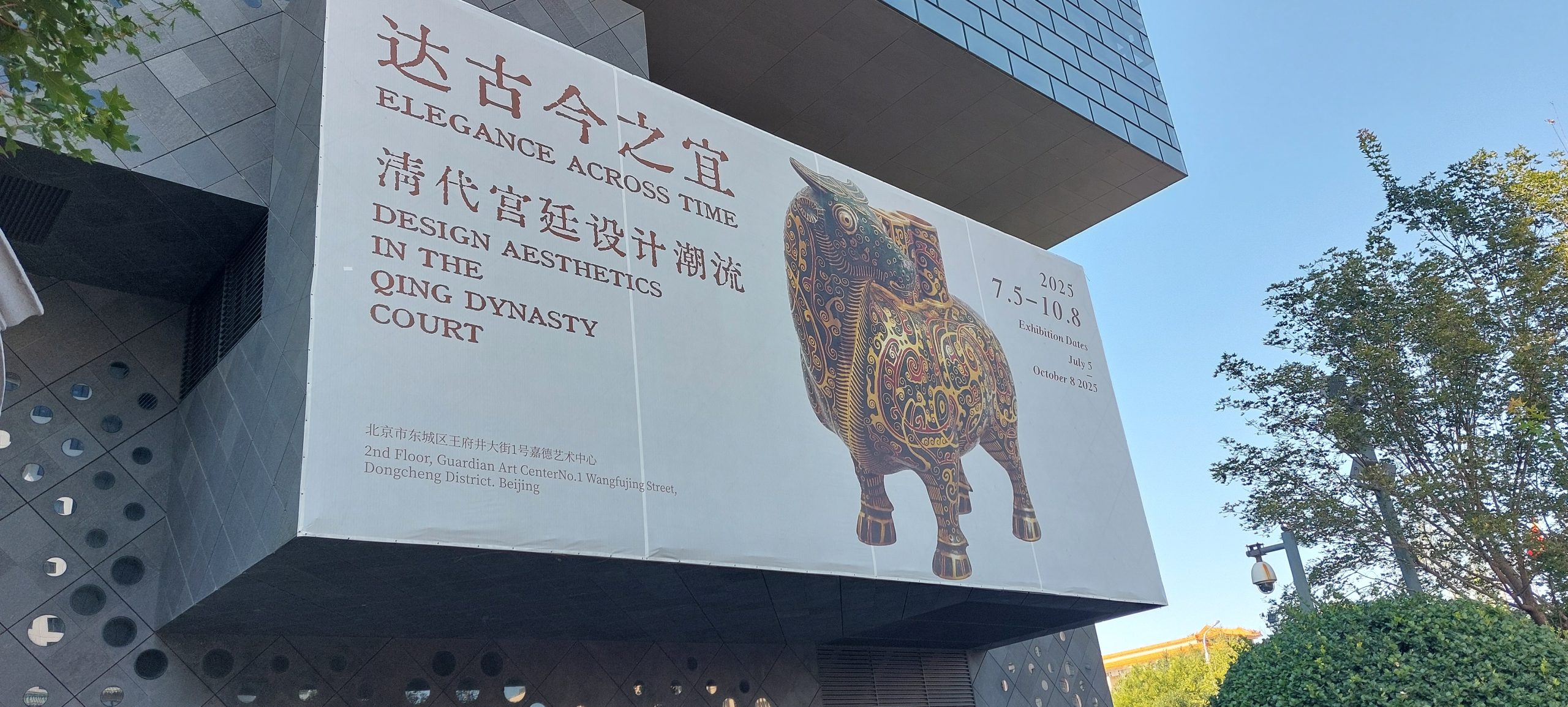
Beijing, Art Museum
Art is everywhere in Beijing.
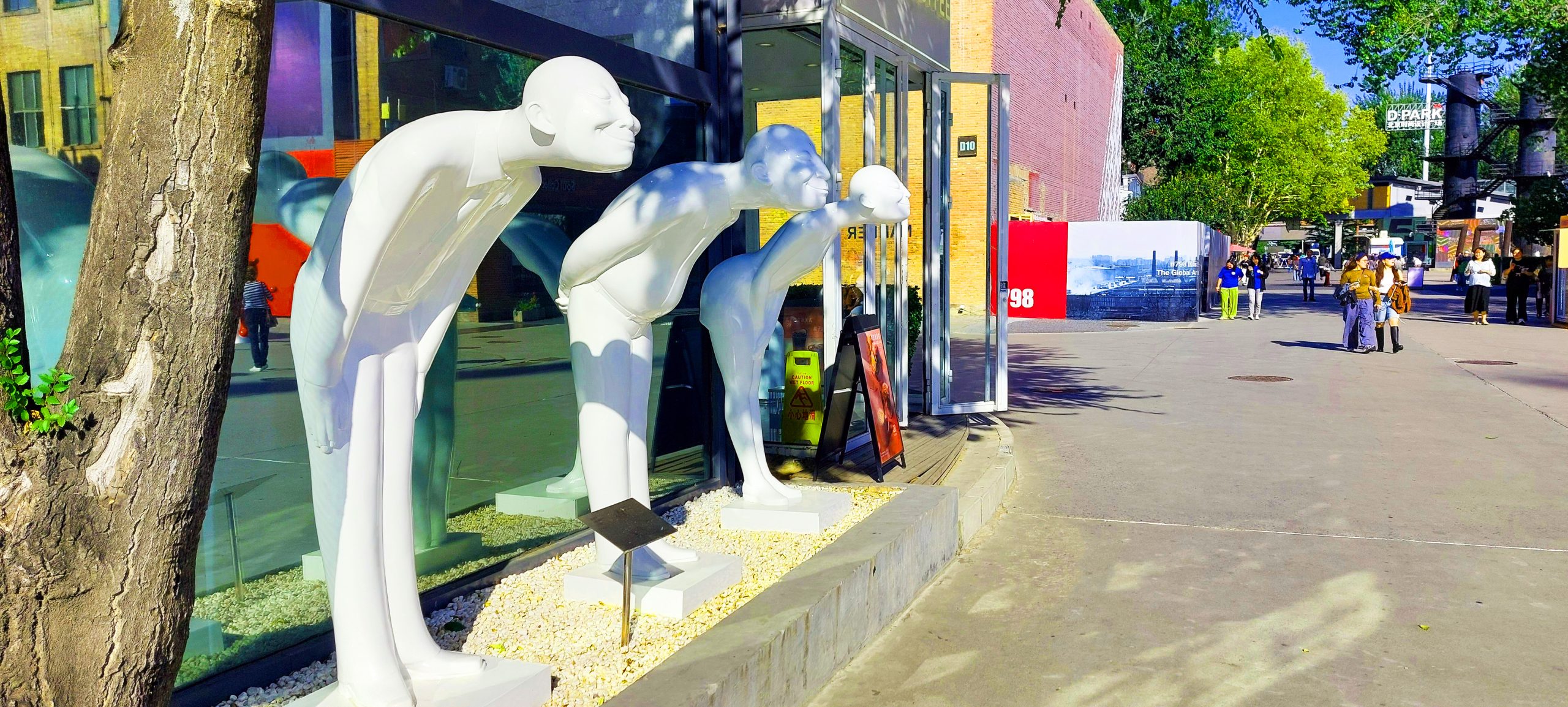
Beijing, 798 Art District
Imagine a whole district dedicated to art of all kinds, growing in what used to be an arms factory.