2050917 – Wednesday – Beijing
We were supposed to have lunch near the Great Wall, but we told Thomas that we were not hungry, and we could drive back to the city, which would take at least an hour and a half. We stopped in a very nice dumpling restaurant. I insisted that Mr. Li join us, but since parking was very problematic, he declined; instead, he went to park the car somewhere far from the restaurant.

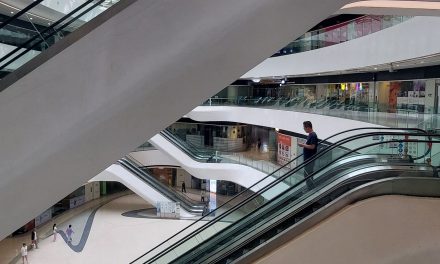
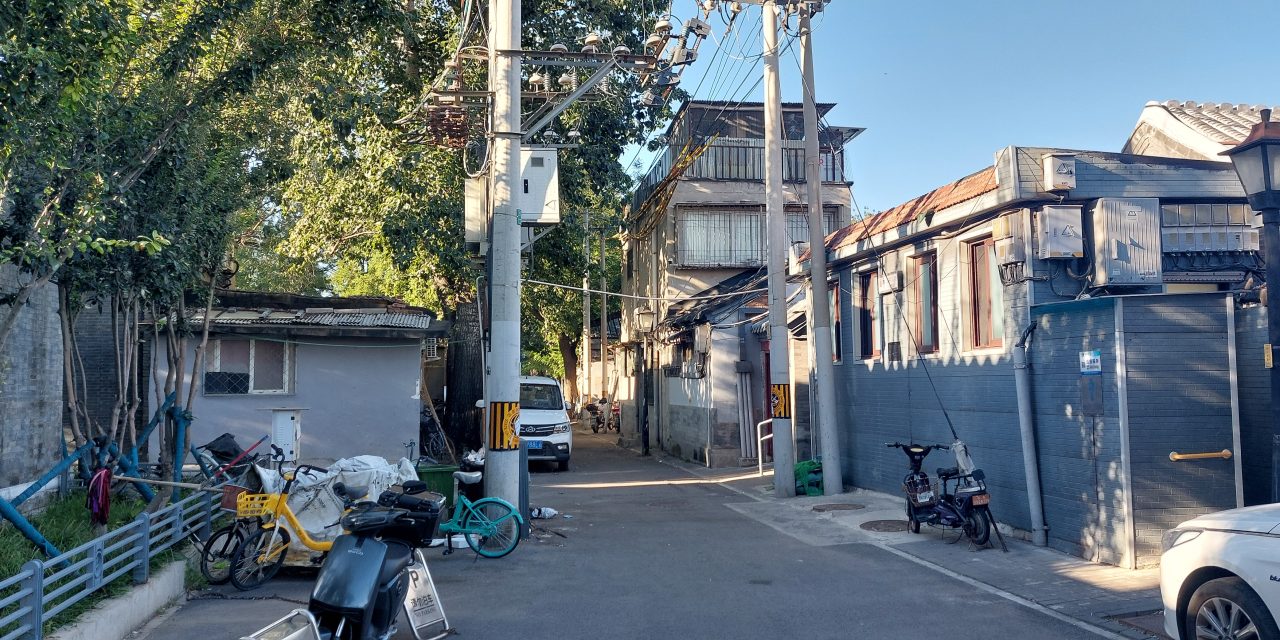
[Modern buildings are everywhere in Beijing and China. If you regard that as a sign of development, it is questionable. But with or without the shiny buildings, China is on a fast lane of development, for sure]
The food was delicious. We also had soup. The restaurant specializes in buns. We asked Thomas to pick for us. And he chose the best because we loved them all. We have, in our arrangement with China Culture Tour, a restaurant spending of 80 CNY per person. If we go above, we will need to pay the difference. However, our bill came to less than 160 CNY, so we didn’t need to pay. We wanted to give the leftover food to the driver, but Thomas said no. He didn’t take it either because his accountant wife cooks excellent home-made Chinese food every night for the family. He has a fifteen-year-old daughter in school. So, we took the leftovers for our night snack at the hotel.
Beijing, Hutong owner
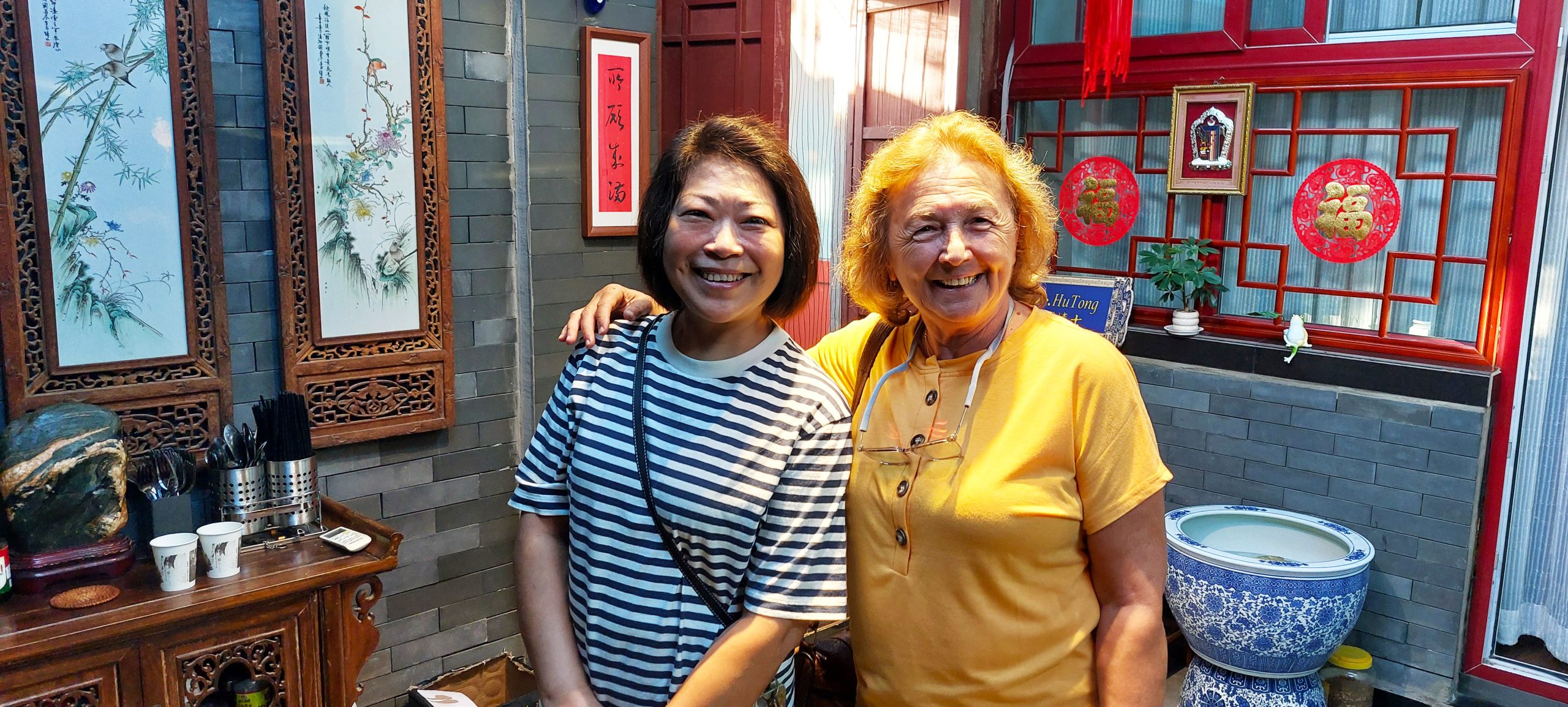
A very warm welcome from the Hutong owner
Beijing, Hutongs
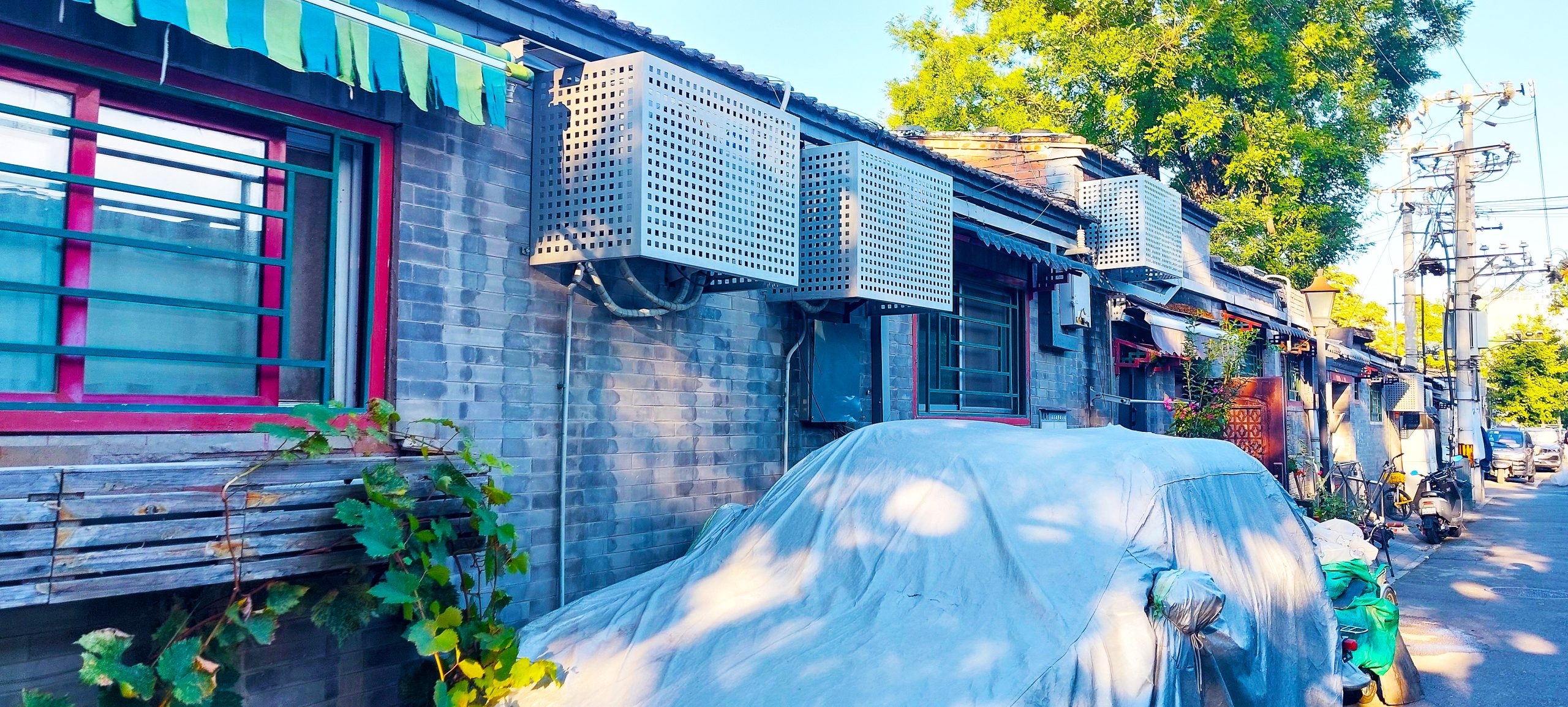
Hutongs, with air conditioners, luxury cars parked outside
Beijing, inside of a Hutong
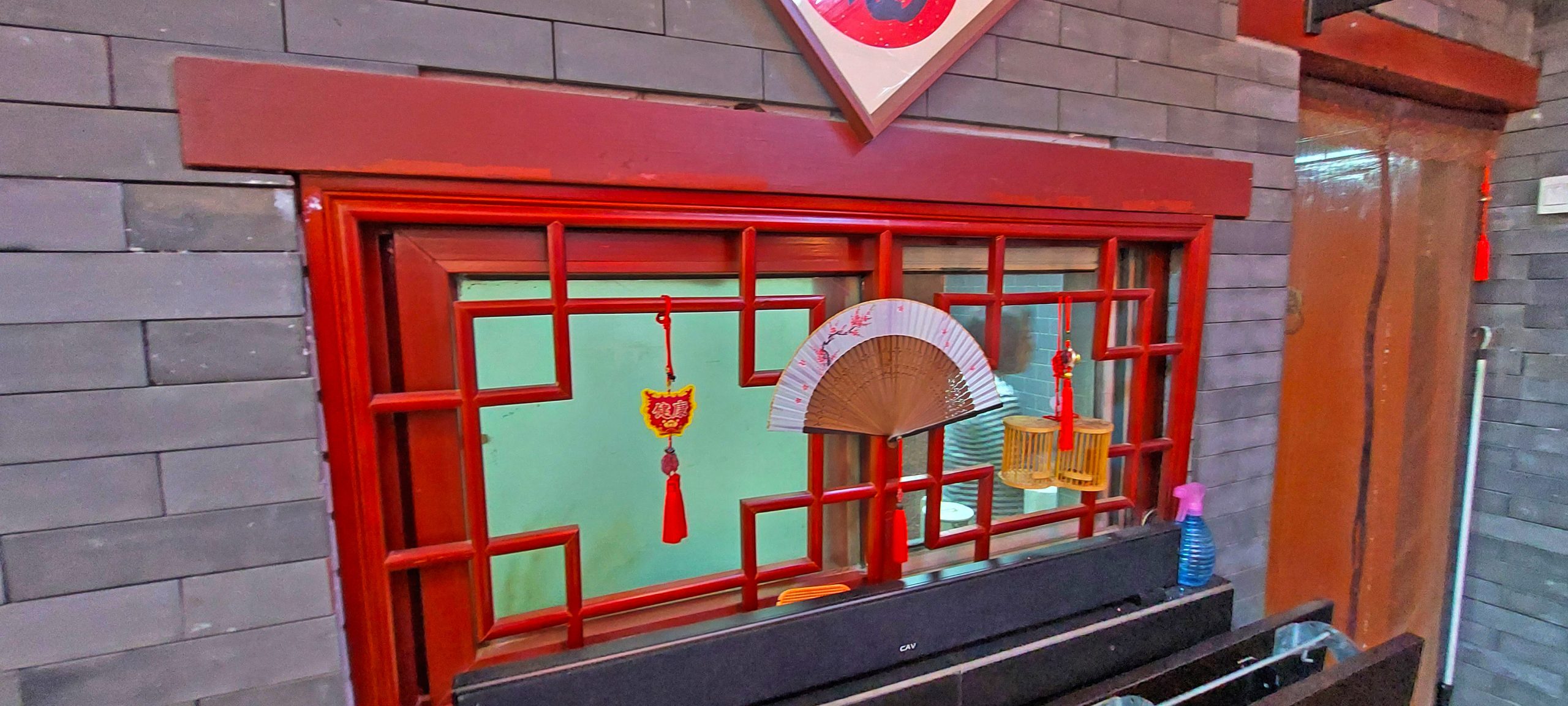
Beautiful structures inside the Hutongs. In the hanging small yellow cage a cricket sings to the owners. Although they only live for a few months, they still make a good pet.
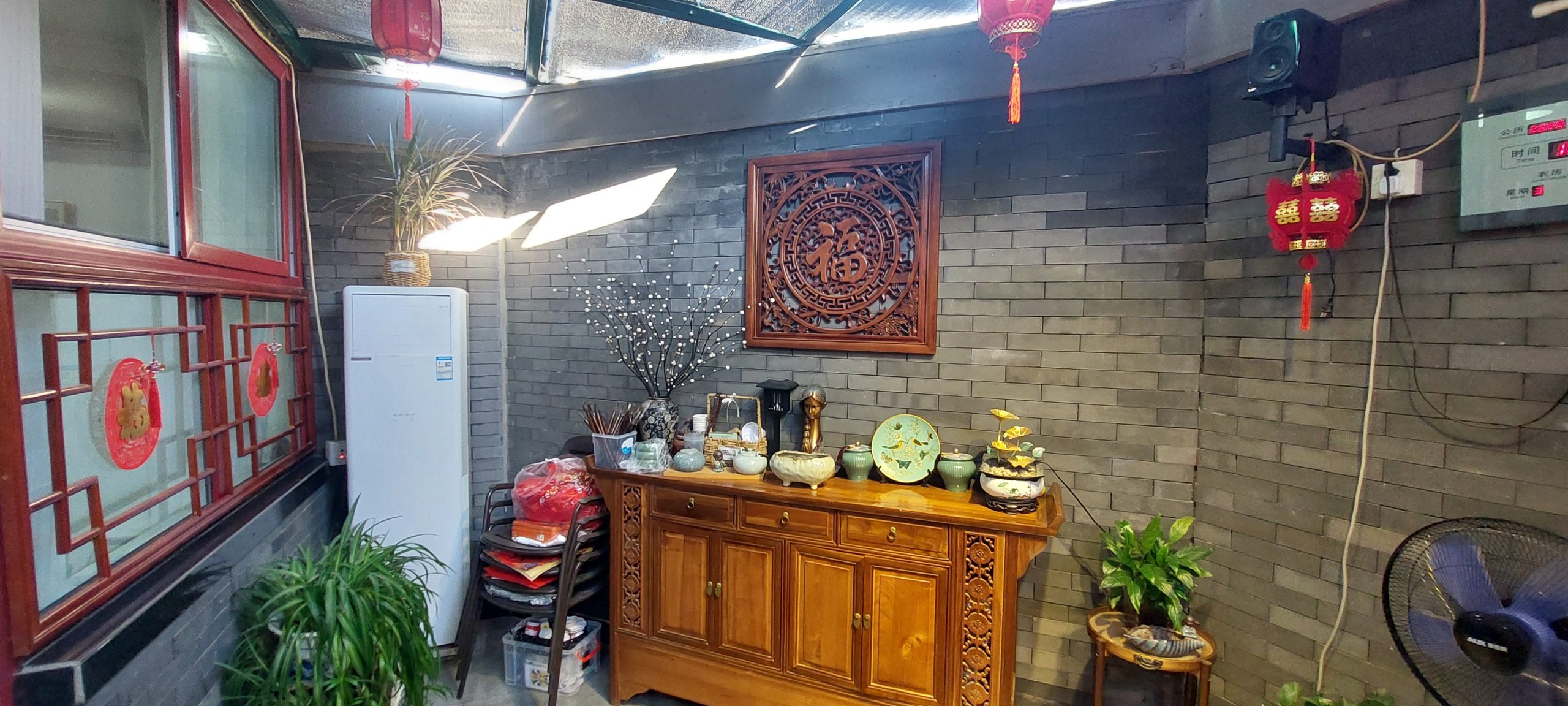
Inside the Hutongs
Tea preparation table
We noticed a slight, yet not-so-obvious, attitude among the guides towards the drivers. First, I thought it was a rank issue inside the company. But when the exact behavior of not including the drivers in our lunches occurred, I decided to ask. I learned that the drivers were freelancers, hired by the tour company temporarily for a specific tour. The same company did not employ them. The cars were also rented on occasion if the need arose. Since the drivers did not belong to the corporation the guides worked for, there was a subtle method of not inviting them to eat. Either the drivers were “trying to find a parking space,” or “were already far away,” or “had eaten earlier when we were busy at a scene,” or “were unavailable.”
Our arrangement included 80 or 90 CNY per person for our lunch or dinner, once a day. If we went above, it was our responsibility to pay the difference. We found out that it was more than enough to cover a very generous lunch for the three of us, including the guide. Many times, we even had beers and still didn’t go over our 160 or 180 CNY limit. At the time of our visit, 7.1 CNY was equivalent to one dollar.
Hutongs
From there, we walked over to the Hutongs. Walking in very narrow alleys, we could see inside the doors of the Hutongs and the cars parked outside. Parking must be tough since there is no place in the very narrow alleys. Every corner was occupied by a vehicle, and to our surprise, it was often a costly car, such as an Audi. Outside, the Hutongs look like grey, dark, shantytown residences. The doors that opened to a court where several homes shared the common ground looked packed and disorganized. There are two types of Hutongs: those where four homes share a court, and others where a single Hutong has a door facing the street. We went to a family that opened their home to visitors to show what a Hutong looked like inside. Their home does not share a courtyard.
We visited the hutongs located around the Drum Tower, near the Gulou district. We had been here the day before, but didn’t venture into the alleys that the hutongs line with.
It was beautiful inside. Through the door, we entered the courtyard of this home. The roof was open but was covered with a transparent cloth that provided shade from the sun. I assume it could be closed because the rain could damage their beautiful art decorations on the walls. A narrow and packed corridor opened to the court, where, towards the end, I could see a kitchen area. We didn’t enter that part, separated by a transparent curtain. I assume the bedrooms would also be there. The court had beautiful furniture, art, and knick-knacks. A separate, small room with cupboards had a table, which I assumed the family would use for eating. To my surprise, the whole house was very well-lit with natural light.
The court had a ceiling that could be opened or closed, along with a semi-transparent cloth shade.
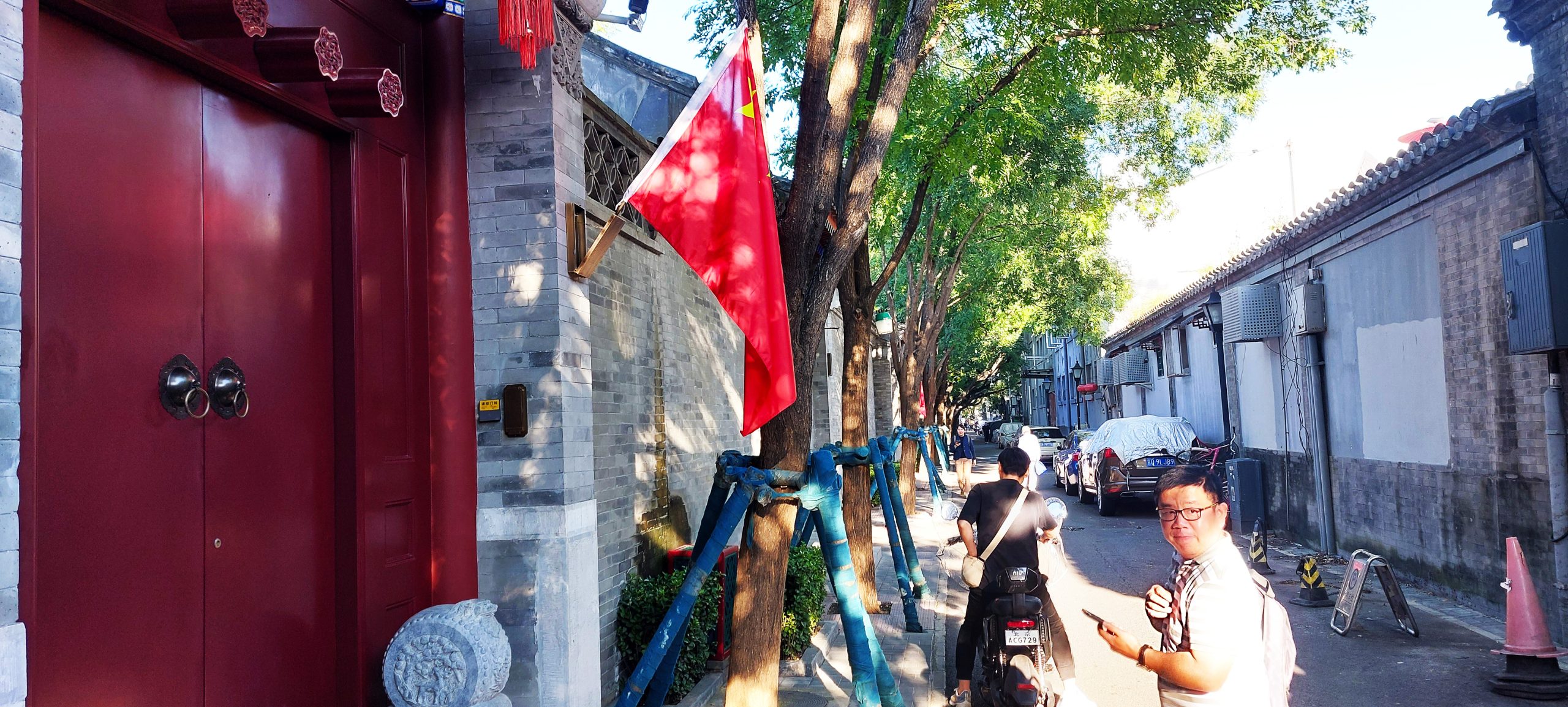
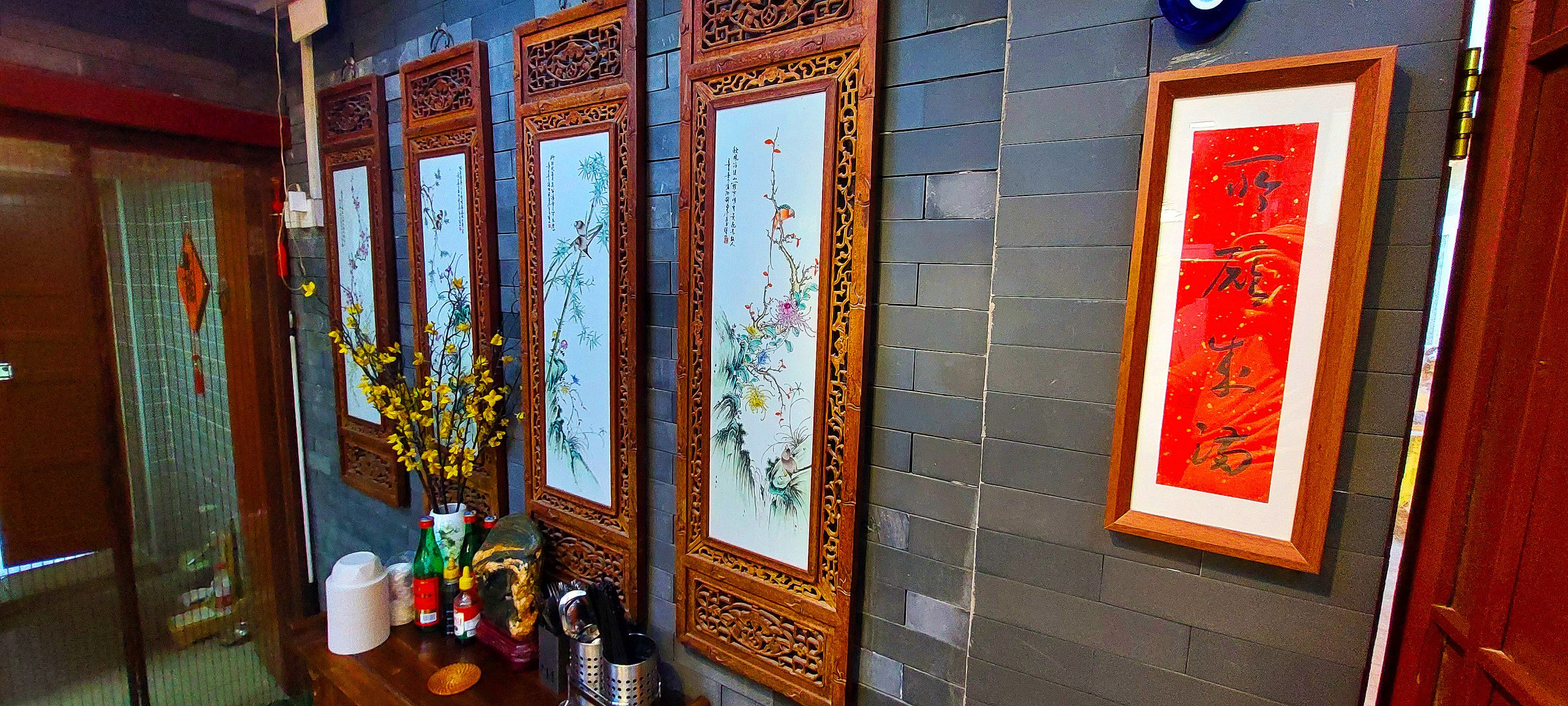
The Hutongs
Hutongs are ancient dwellings in Beijing. They were founded during the Yuan Dynasty (1271 — 1368), and they were established for ordinary people who lived outside the “Forbidden City.” The hutongs we see are at least 400-600 years old, but their origins go back more than a thousand years. The word “Hutong” means “water wells” in the Mongolian language. When the city, now known as Beijing (its name was Dadu during the Yuan dynasty) was being built around the Forbidden City, and Beijing became the capital, hutongs were built as “Siheyuan”s, the courtyard homes around the water wells. High-ranking officials were given land in the city. The hutongs were constructed according to stringent rules and regulations. The alleys between them were drawn, and it was ensured that ventilation and sanitation were taken care of for all. Originally, there were only 29 designated, official hutongs; as hutongs developed with time, rules and regulations became less stringent. They became vibrant neighborhoods and were symbols of Beijing’s lively art and culture. Hutongs became the heartbeat of Beijing, characterized by close-knit relationships and solidarity among neighbors. Today, they are the living museums of the lives of ordinary Chinese who were not allowed inside the imperial palaces or even cities like the Forbidden City.
After the establishment of the Republic of China, hutongs started to deteriorate due to rapid changes, wars, and internal conflicts. Still, they represented the unique and cultural way of Chinese living, structured around courtyards and water wells. Alleyways became an array of mazes that connected the neighborhoods.
Traditionally, Hutongs run in the east-west direction. However, homes are often oriented to face south to maximize sunlight—different types of hutongs are wide, narrow, long, and short. The way homes and hutongs are built reflects Chinese beliefs in harmony, balance, and philosophy. Other trends have influenced hutong architecture over time, particularly during periods when new dynasties ruled the country from Beijing.
In the Yuan dynasty, planning, organizing, rules, ranking, and regulations were enforced. The Ming dynasty experienced a significant increase in population following the implementation of new rules. Under the Qing dynasty, these dwellings became denser, complex, and expanding
The Hutongs are very small, and the owners are not allowed to make any changes or restorations to preserve the living heritage. They are all painted or preserved, originally made from grey bricks. Their roofs are all dark grey. This was a requirement from ancient times. Ordinary people were not allowed to use any color except grey or black. As we would later see, imperial buildings could feature red, yellow, or green roofs, assigned to royalty and very high officials in the government.
We saw a house with a big, high door at the corner while we were leaving the Hutong area. The door had four “hairpin” numbers or characters on it. Thomas said this must have belonged to a very rich or a very high-ranking official because only the extremely rich were allowed to have four hairpins on the doors. Lower-ranking officials would have fewer hairpins to show their rank. It was forbidden for ordinary people to have hairpins on the doors.
All homes and palace buildings have a very high threshold at the doors. This is because they believe that evil spirits do not have knees, and they can’t jump with two feet without using their knees. That means the evil spirits cannot jump over and get in through high thresholds.
In the hutong, we noticed a small cage containing a pet cricket. People enjoy the singing of the cricket, even though the bug only lives for about three months. In the past, people would have their crickets fight and gamble on them to win. A very fat cat wandered into the courtyard and was stopped rudely by the owner when she tried to enter the dining room.
Hutongs are disappearing fast. When the city expanded and modernized, these jewels of Peking were destroyed to make way for skyscrapers, tall apartments, business buildings, and wide roads. Originally thought to have around 3,200 hutongs in 1949 in Beijing, the estimate in 2012 has shrunk to 900, and they are disappearing rapidly. In 2017, it is estimated that only 300 of them remained.
Since the hutongs are very small and cramped, their bathrooms become a problem. Since the owners are not allowed to undertake extensive renovations and there is limited space, they use the communal bathrooms located down the street, which are in close proximity to the hutongs. There are government workers from the sanitation department who come and clean them every day. We have seen and used the bathrooms, and they are clean. Some don’t have closets, but they have a “hole on the ground,” yet the cleanliness surprised me. There are public toilets in every street, neighborhood, and public space. Some businesses or restaurants don’t have their own bathrooms, because a clean public toilet is available right outside
It may stem from the hutong tradition, but Beijing and other places have addressed their bathroom problem very wisely. We noticed public toilets on every street. Additionally, in every tourist attraction and even in the most crowded places, a clean bathroom is always available. These are mostly the “hole in the ground” type, but in the ones I visited, there is at least one closet. Later, to our surprise, on top of the Zhangjiajie mountains (September 24-26, 2025), way up in the wilderness park, there was a very clean, automatic-flushing, heated-seat bathroom.
Although many hutong residents, especially the elderly who have lived in the hutongs their entire lives, endure this problem, many of their young children prefer to move to a small apartment to have their own private bathrooms. Older people are not willing to give up their neighbors, friends, and lifelong memories and move to the flats. At night, the people use buckets and pans for their needs, while using the public toilet during the day. This must be particularly challenging for the elderly.
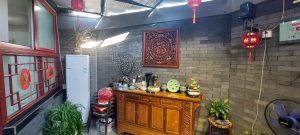
Tea preparation table
Hutongs seem from the outside to be decrepit and old. Indeed, they are old, but the prices of the disappearing old grey homes have skyrocketed. These homes are privately owned and can be bought, sold, or inherited by the children. Each square meter ranges from $ 20,000 to much more. It brings the price of each hutong to around $ 2 million. Even if the owners may not have their private bathroom, they are sitting on a treasure.